
KOCHI: India is set to introduce an electronic observer (e-observer) system that will remotely monitor fishing vessels and record catches with precision — a move aimed at transforming how the country manages marine resources and defends its seafood exports in global markets.
Unveiling the plan in Kochi, Union Fisheries Secretary Abhilaksh Likhi said the e-observer, developed by the Fishery Survey of India (FSI), will serve as an onboard electronic eye.
“It will provide accurate scientific data for stock assessment and management by observing fishing operations across various vessel types,” he said at the opening of a five-day global workshop on species identification, jointly organised by the Indian Ocean Tuna Commission (IOTC) and the FSI.
Officials said the initiative will also help India comply with IOTC rules, which mandate observer coverage and electronic monitoring of tuna and allied fisheries. More importantly, it is expected to arm India with science-backed, verifiable data — described as the country’s strongest defence against non-tariff barriers and allegations in export markets.
India has already upgraded its monitoring framework, with nearly 36,000 fishing vessels fitted with transponders under the Pradhan Mantri Matsya Sampada Yojana (PMMSY) for real-time tracking. The e-observer will be the next big step in building a comprehensive fisheries data ecosystem.
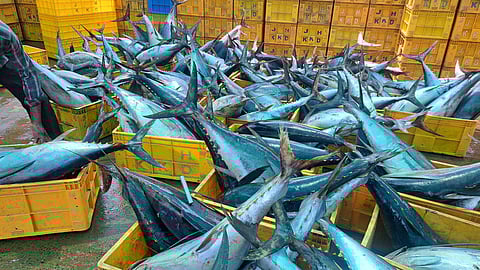
Since tuna, tuna-like species and pelagic sharks are highly migratory resources, Likhi stressed the need for regional and international cooperation to ensure sustainability, even while protecting the livelihoods of millions dependent on the sector.
The workshop also highlighted concerns over the global quota allocation system for commercial tuna fishing. CMFRI Director Dr. Grinson George called for a revision to secure a fairer share for developing nations like India, while also underlining the need for robust cold chain infrastructure to improve the competitiveness of Indian tuna exports.
Experts from 12 nations including Japan, France, Thailand, Indonesia, Malaysia and South Africa, along with officials from Indian coastal states, are participating in the workshop.