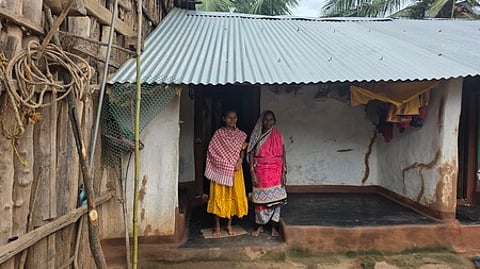

BHUBANESWAR: It is known as the Kashmir of Odisha, but basic amenities remain a dream for the residents of Mandubadi, a hamlet in Kandhamal district. They draw water from a pond, called ‘chuva’ in local parlance, which animals also depend on to quench their thirst. Women walk long distances to fetch water and rely on streams and ponds to bathe and wash clothes.
The scene is similar in most tribal hamlets of Odisha, where development remains a distant dream. Climate risks have made agriculture unaffordable, pushing families into extreme poverty and forcing them to migrate in large numbers in search of livelihoods.
Standing on a construction-site scaffold in his hamlet of Barabharania, Ganga Naik skilfully places bricks and fills the gaps with mortar, with two other helpers working alongside him. He stares at the scorching sun, gulps down water and glances at the distant paddy field where women are busy planting seedlings.
“Had I continued working in the fields here, I would have remained a tenant farmer struggling with debt. I constructed a pucca house for my family three years ago, and this one is for my brother, who works at a hotel in Kerala. Migration has changed my life. I have provided proper education to my children and climbed the ladder of success, earning dignity for my family,” he says, wiping the sweat off his forehead.
The 36-year-old resident of the hamlet in Odisha’s Ganjam district migrated to Kerala 20 years ago on the advice of elders. He ended up in Ayarkunnam, Kottayam, where he worked for a daily wage of Rs 150. Ganga Naik is especially proud of his involvement in the construction of buildings at Kottayam Medical College Hospital. Today, he is a senior mason earning Rs 1,100 to Rs 1,300 a day.
The Odisha-Kerala migrant corridor has become a gateway of hope, offering people a chance to pursue dignity and escape life’s uncertainties. Every year, thousands from Odisha travel nearly 1,860 km in packed trains, often without food or water, to reach Kerala, aspiring to change their destiny through hard work.
Among the 140 residents of Barabharania, a majority of the youth work in Kerala for around eight months and spend the remaining four months at home cultivating their farmlands.
“I have been working as a helper at a construction site in Kerala for the past three years. I earn ₹800 per day there, while wages are as low as ₹200 here in our village. We return home by May and take up agricultural work. The paddy we cultivate is for my family, and I am able to save a portion of my wages after meeting household expenses,” said Gajendra Gomang, a resident of the hamlet.
“We get better wages and respect in Kerala. There is exploitation in other states. I was taken to Tamil Nadu for a job at a tailoring unit but was asked to work as a construction labourer. When I protested, they locked me in a room, and my friends in Kerala had to pay ₹9,000 to secure my release,” says Chandra Naik.
Though Kandhamal is famous for its GI-tagged turmeric, farmers are being forced to abandon agriculture as yields continue to decline.
July is the peak monsoon season in Odisha, but rainfall has been scanty. Recurrent cyclones have also ravaged the coastline and hills.
“Turmeric is the main crop here, but the yield has reduced to a quarter of what it was two decades ago. Labourers earn just ₹200. This has forced youngsters to migrate. We cultivate paddy during the monsoon season and vegetables such as potatoes, brinjals, beans, cauliflower and cabbage later on. But climate change has drastically altered our lives,” says Nanajya Pradhan, the sarpanch of Danekbadi panchayat.
Nanajya himself had been a migrant worker. In 2020, he migrated to Kerala in search of livelihood. He arrived at an ice factory in Thrissur, but it shut down seven days later as the state plunged into a lockdown following the Covid-19 pandemic.
“All workers were leaving, but I had nowhere to go. I told the owner that I would work as a security guard without wages, and he agreed. After the lockdown, I found a job, but I returned home in 2021 ahead of the local body elections,” he recalls.
