
IDUKKI: Long before the Idukki dam divided the hills of Cheruthoni and organised religions came to define communities, tribal groups used to gather at a hilltop known as Koodathandu, which literally translates to “the place where people came together.”
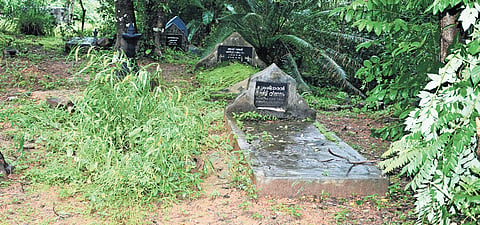
Today, that site is home to the Periyattappan Mahadeva Temple and Thilakashi Peedam, perhaps one of Kerala’s most unusual public cemeteries, one where people of different faiths continue to find common ground in death.
The tradition dates back more than six decades. At the heart of the site stood a Shiva Lingam believed to have been worshipped by sages.
Every year, members of the Oorali tribe, who had migrated from settlements near Neriamangalam, the Mannan community living along the Periyar and the Chembakassery tribal community gathered here to worship, irrespective of clan differences. The adjoining land served as a common burial ground.
When Idukki dam was built, migrant workers who died during its construction were buried at the same site. Rather than allowing the tradition to disappear, the Periyattappan Mahadeva Temple Trust, formed in 2009, transformed the burial ground into Thilakashi Peedam, opening it to people from all religions and communities.
Since then, more than 500 people have been buried there, including unclaimed bodies brought after police procedures and people whose families could not afford funeral expenses.
The trust’s commitment to inclusiveness is reflected in its own composition, with members drawn from different religions. One of its Muslim trust members, too, was buried at Thilakashi Peedam.

The temple itself bears testimony to the region’s tribal heritage. It preserves the hair and walking stick believed to have belonged to legendary tribal guide Chemban Kolumban, who helped identify the site for the dam. It is also home to Kuravan and Kurathi, the guardian deities associated with the two hills separated by the dam.
“The temple’s philosophy is inspired by the scientific idea of quantum entanglement, a belief that entities once connected remain fundamentally linked despite being separated. For us, it symbolises humanity. Religion, caste and culture may differ, but people remain connected,” trust chairman Parthasarathy told TNIE.
Located just 2km from the government medical college, the temple frequently receives requests to bury unclaimed bodies. “In that moment, religion does not matter. What matters is ensuring every person receives dignity in death,” Parthasarathy said.
He said the trust comprises people with an interest in astronomy and scientific thought.
“Nature recognises only living beings – plants, animals and humans. Religious identities are social constructs. Our endeavour is to remind society that humanity is the bond that unites us all,” he said.