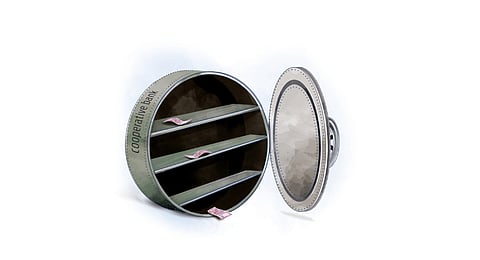

THRISSUR: While the LDF-led Karuvannur Service Cooperative Bank is embroiled in an alleged scam involving over Rs 200 crore, the UDF-backed Irinjalakuda Town Urban Cooperative (ITU) Bank is now facing a far larger financial crisis, with suspected irregularities leaving the bank with a debt of around Rs 400 crore.
The bank, which is currently being managed by an RBI-appointed administrative panel, has left more than 7,000 depositors waiting to access their life savings. Aggrieved depositors staged a mass protest in Irinjalakuda on Saturday, demanding the release of their money.
Established 108 years ago and regulated by the state cooperative department, the Irinjalakuda Town bank’s financial health began deteriorating in 2019 as its non-performing assets (NPAs) rose sharply. On July 31, 2025, the RBI superseded the bank’s board of directors and appointed an administrative panel to manage its affairs.
The then board chairperson, M P Jackson, challenged the RBI decision before the Kerala High Court. The court, however, dismissed the plea while directing the RBI to consult the registrar of cooperative societies before extending the tenure of the administrative panel.
“We have sought the support of the state government to revive the bank and restore the confidence of depositors,” Jackson, who is now the chairperson of Irinjalakkuda municipality, told TNIE.
“The bank’s financial position is still such that it can function if certain properties owned by the bank are sold. Had the elected board been allowed to continue, we could have resolved the issues.”
Since the RBI takeover, around Rs 460 crore has been disbursed to eligible depositors through the Depositor Insurance and Credit Guarantee Corporation, under which each depositor is entitled to an insurance cover of up to Rs 5 lakh. However, many depositors continue to remain unpaid as several had deposits exceeding the insured amount.
“ITU Bank has served families here for nearly three generations. Many people invested all their life savings in the bank because they trusted it completely. Then, one day, we were told we could no longer withdraw our own money. We are not even getting the interest promised on our deposits. If the bank was licensed by the RBI, doesn’t the regulator have a responsibility to protect ordinary people’s money? Who should we approach now? Some depositors urgently need money for treatment or their children’s higher education,” said Sunil Kumar, a depositor.
Sunil has been coordinating depositors by forming an informal WhatsApp group. With his wife currently undergoing cancer treatment, he said access to the deposits would have greatly eased the family’s financial burden.
Meanwhile, Gopi Krishnan C R, the RBI-appointed bank administrator, said protecting depositors’ interests remains top priority.
“Our primary objective is to safeguard depositors’ money. However, we must function strictly in accordance with RBI directives. At present, we cannot permit unrestricted withdrawals. We are aggressively pursuing debt recovery, but the process takes time. We are also working on one-time settlement schemes with loan defaulters, which could help bring funds back into the bank more quickly,” Gopi said.
He added that more than Rs 400 crore is needed to pay back the depositors. He attributed the bank’s crisis to poor professional management, violation of lending norms, and delays in loan recovery. “Before sanctioning a loan, banks normally conduct a detailed credit appraisal to assess the borrower’s repayment capacity. It appears that no such due diligence was carried out in several cases here, even for loans exceeding Rs 1 crore,” he said.
Under banking norms, loans of Rs 1 crore and above must be placed before the board of directors for approval. However, according to the administrator, these procedures were frequently bypassed at the bank.
Following RBI’s intervention, a professional team was appointed to strengthen debt-recovery efforts. Officials also suspect that excessive political interference in the bank’s functioning allowed loans to
be sanctioned with little scrutiny, merely on the basis of applications submitted by borrowers.
Crisis at bank
Total deposit : L1,160.13 crore (as of April 2025)
5.86% Capital Adequacy Ratio (higher CAR shows bank’s capacity to repay deposits)
Net loss for the year 2024-25: L45.22 crore
Net loss for the year 2023-24: L29.11 crore
NPA increased significantly from 7.35% in 2022-23 to 21.03% in 2023-24 and 77% in 2024-25
