
THIRUVANANTHAPURAM: Kerala's public sector enterprises (PSEs), long seen as instruments of welfare and development, have emerged as one of the biggest sources of fiscal stress for the state, prompting the Congress-led UDF government to propose sweeping reforms, including restructuring, disinvestment, and even closure of non-strategic units.
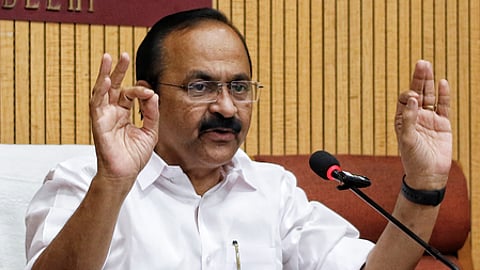
The recommendations were contained in the 'Kerala's Fiscal Health: A Status Report,' tabled in the Assembly on Thursday by Chief Minister and Finance Minister V D Satheesan.
The report identifies the Kerala State Electricity Board Ltd (KSEBL), Kerala State Road Transport Corporation (KSRTC), and Kerala Water Authority (KWA) as the principal contributors to mounting losses and warns that their financial condition is placing a growing burden on the state's finances.
Kerala currently has 132 active public sector enterprises, spread across sectors ranging from manufacturing and infrastructure to financial services and public utilities. Government investment in these entities increased sharply from Rs 28,513 crore in 2020-21 to Rs 44,846 crore in 2024-25. However, the report notes that a handful of enterprises account for most of this investment, with KWA, KSRTC, and KSEBL among the largest recipients of government funds.
Despite the massive public investment, the overall financial performance of the sector remains weak. According to the report, most government companies and statutory corporations have recorded losses for years, leading to a steep rise in accumulated losses. The total accumulated loss of Kerala's PSEs increased from Rs 31,517 crore in 2021-22 to Rs 72,851 crore in 2024-25.
The report identifies the three major utilities as the biggest drivers of this deterioration. KSRTC and KWA together accounted for nearly 80% of total losses among PSEs in 2021-22. In 2022-23, KSRTC, KWA, and KSEBL together contributed almost two-thirds of total losses.
The pattern continued in subsequent years, underlining the extent to which Kerala's fiscal challenges are tied to the performance of these public utilities. "The analysis in general shows that three public utility enterprises accounted for the lion's share of the total loss of PSEs in Kerala," the report observes.
Beyond the losses themselves, the report highlights the wider fiscal implications. Poorly performing enterprises generate little return for the state in the form of dividends or profits while continuing to depend heavily on budgetary support, subsidies, and grants. Many are also unable to repay loans received from the government.
As of March 31, 2025, KSRTC, KWA, and KSEBL were the three largest defaulters in principal and interest repayments owed to the state government, accounting for 69% of total arrears due from public enterprises, municipal corporations, and cooperative institutions. The report argues that the consequences extend beyond public finances. As providers of essential services such as electricity, transport, and water supply, inefficiencies in these utilities increase costs across the economy, affect productivity, and reduce Kerala's attractiveness as an investment destination.
Among the three, KSEBL's financial stress is linked largely to Kerala's dependence on purchased power. The report notes that only around 25% of the state's electricity requirement is met through internal generation, with the balance procured from outside sources at significantly higher cost. Combined with delays in tariff revisions, this has resulted in a revenue gap that accumulated to more than Rs 6,645 crore by 2023-24.
KSRTC continues to remain trapped in a cycle of recurring losses, with accumulated deficits completely eroding its net worth. The report warns that the corporation's weak finances have reduced its ability to invest in modernisation and expansion at a time when efficient public transport is essential for sustainable development.
KWA, too, has reported losses throughout the review period. Though its net worth remains positive, accumulated losses have more than doubled over six years, reflecting a steady worsening of its financial position.
To address the crisis, the report proposes a broad restructuring framework. A key recommendation is that utilities should increasingly operate on commercial principles while continuing to fulfill their social obligations. "Social responsibilities should not be used to mask operational inefficiencies or financial mismanagement," the report states. It recommends replacing enterprise-level subsidies with direct subsidies to consumers through digital platforms and direct benefit transfer mechanisms. This, the report argues, would improve transparency, ensure benefits reach eligible households, and prevent losses from being hidden within utility accounts.
The committee also calls for a major expansion of Kerala's electricity generation capacity, warning that future industries such as artificial intelligence, data centres, and advanced manufacturing will require abundant and affordable power.
In a notable restructuring proposal, the report suggests merging the Kerala State Beverages Corporation and the Kerala Civil Supplies Corporation. This would allow profits from liquor sales to offset losses from subsidised food distribution, reducing tax liabilities and lowering the subsidy burden on the government.
For non-strategic enterprises, the report advocates disinvestment, privatisation, or closure where units are no longer economically viable, while safeguarding employee interests. It also recommends putting underutilised land and other assets owned by loss-making enterprises to more productive use.
The white paper's assessment signals that the UDF government sees reforming public enterprises as central to restoring Kerala's fiscal health. While recognising the social role of state-owned institutions, it argues that continued losses can no longer be sustained indefinitely by the exchequer.
