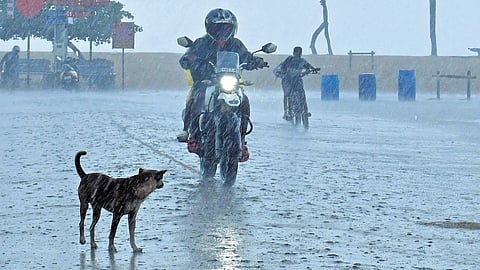

KOCHI: With the India Meteorological Department (IMD) confirming the arrival of El Nino, the state is staring at deficit southwest monsoon. But more than the agriculture sector, the news has left the KSEB worried.
The state meets around 75% of its power demand through purchase from the Central Grid and private power generators. The rest of the power is generated by state’s hydroelectrical projects like Idukki, Sabarigiri and Idamalayar.
The average daily power consumption, which had touched 118 million units on April 27, has fallen to 85 million units with the onset of monsoon. However, the alarming factor is that the water level in the reservoirs has fallen to an average of 21% and the KSEB can generate only 851 million units with the current storage. If the monsoon does not deliver and the flow to dams gets reduced, the state will have to depend entirely on electricity bought from outside.
Kerala received 22% excess rainfall from June 1 to June 12. But the monsoon is expected to weaken from next week.
According to IMD, El Nino conditions are confirmed if the sea surface temperature for three months show an average anomaly of 0.5 degree Celsius.
“El Nino Southern Oscillation (ENSO)-neutral conditions prevailed over the equatorial Pacific Ocean during June and July 2025. La Nina conditions emerged in August 2025 and persisted through February 2026. ENSO-neutral conditions redeveloped in March 2026.
The latest 3-month running mean anomaly for April–May–June has crossed the El Nino threshold of +0.5°C,” the IMD release said.

‘If monsoon fails, state will have to depend more on Central Grid’
“El Nino is a climate phenomenon characterised by the warming of ocean surface water in the central and eastern tropical Pacific Ocean. It has disrupted the southwest monsoon in the past. It can weaken or in some extreme cases alter the wind pattern. But it may also trigger localised high impact weather events like cloud burst,” said IMD Thiruvananthapuram director Neetha K Gopal.
Though the IMD has predicted a 10% deficit monsoon, meteorologists expressed hope that the Indian Ocean Dipole (IOD) may bring some respite. IMD says the IOD may turn positive by the end of southwest monsoon (August-September), which may reduce the impact of El Nino. A positive IOD occurs when waters near eastern Africa become warm and the ocean near Indonesia turn cooler. Such conditions tend to favour better rainfall over India and can partly counter the drying effect of El Nino.
“The KSEB had availed additional power to meet the summer demand through short term purchases during the March-May period. The peak-hour demand which crossed 6,000 MW in the first week of May has fallen to 4,500 MW in June. If the monsoon fails due to the impact of El Nino, we will have to depend more on the Central Grid,” said a senior KSEB official.
“The KSEB has invited tenders for short term purchase of power from June to December. The tender processing will start after June 15. If the Power Regulatory Commission approves, the board will be able to purchase more power,” the official added.