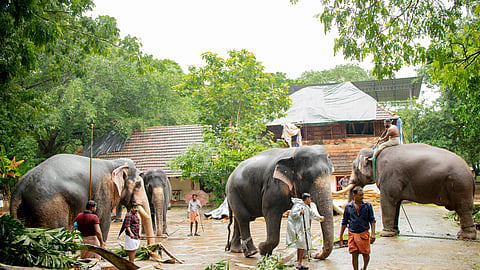

GURUVAYUR: Elephants hold a distinctive place in Kerala’s cultural life and temple traditions. A hallmark of this heritage has been the Punnathur Anakotta in Guruvayur. One of the largest elephant sanctuaries in the country, it is now the subject of an important discussion: is it time to rethink the model?
There was a time when the 18.5-acre refuge housed as many as 77 elephants. Today, the number has declined to around 34. The steady decrease over the last decade, magnified by the deaths of several elephants in recent years, has raised concern among elephant lovers and experts.
The animals’ health and living conditions have emerged as the biggest worry, with studies and experts saying prolonged chaining and limited movement can contribute to fluid retention, foot diseases, and stress related to excess body weight.
Foot-related illnesses, in particular, are a major worry. By remaining in a standing position for long hours, which is exacerbated by the muddy and damp surroundings, the elephants risk developing foot ulcers and related complications.
The health condition of one of the inhabitants, Nandan, considered among the heaviest elephants in Asia, has drawn particular attention. Former managers and mahouts associated with the sanctuary believe importance should be given not only to treatment but to diagnosis, long-term monitoring and scientific treatment protocols.
Devaswom chairman A V Gopinath told TNIE that wildlife veterinarian Dr Arun Zachariah is expected to visit the sanctuary soon and examine all the elephants. He said the devaswom will urgently implement all necessary steps to protect the temple’s elephant wealth.

Restricted movement, limited space negatively affect elephant health
Under natural conditions, elephants are animals that travel long distances each day. However, studies indicate that restricted movement and limited space can negatively affect their health.
Experts emphasise that adequate strolling, social interaction within groups and a nature-friendly environment are essential for both mental and physical well-being. Environmental factors also play a big part. Soil quality, water availability, waste management and sanitation are crucial for facilities that care for large groups of elephants.
In 2013, an expert subcommittee formed by the Kerala State Board for Wildlife conducted a study of the sanctuary. The panel, among whose members included the late poet and activist Sugathakumari, raised concerns about inadequate space, insufficient exercise and water facilities and the need to improve management practices.
Over the years, specialists and observers have also stressed the need for scientifically reorganising mahout training, systematic knowledge transfer and accountable division of responsibilities. Today, the central question remains: can the Punnathur sanctuary continue as a refuge for elephants or has the time come to adopt a new conservation model?
A model of sustenance
The core idea behind the new plan is simple: more freedom, more movement and a more nature-friendly life for the animals
Proposed features include
Large open spaces allowing elephants to move in groups
Regular walking areas and reliable water facilities
Rainwater harvesting systems
Sanitation-based waste management
Dedicated systems for processing elephant urine and dung
Biogas production and related industrial opportunities
Training centres for mahouts
Special medical facilities for pregnant female elephants and calves
Scientifically designed nutrition plans
Drawing on successful initiatives
The Pinnawala Elephant Orphanage in Sri Lanka and large-scale facilities in Gujarat have been cited as examples of successful care models. These allow the elephants to live in groups, move freely and bathe in waterbodies
Experiences from Pinnawala suggest that good nutrition and calm management are more effective in guiding elephant behaviour than fear-based control
Another proposal suggests keeping just elephants required for daily temple rituals at the existing centre, while relocating the remaining elephants to the new habitat and implementing a rotation system
The elephants offered by devotees are not merely temple assets; they are part of the cultural heritage. Therefore, beyond emotional debates, there is a growing argument that a long-term policy should be developed based on scientific care, transparent administration, modern veterinary services and environmentally sustainable infrastructur
New home in making
Years of studies and suggestions on creating a more spacious habitat to ensure long-term welfare of the elephants seem to have bore fruit. It is understood that a new 100-acre site has been identified, with an integrated development plan that could eventually expand the area to around 130 acres.