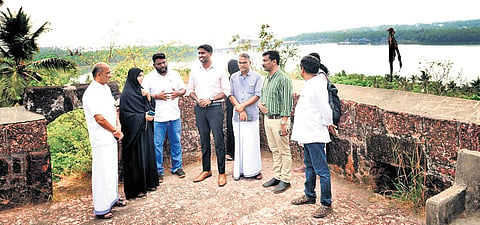

KASARGOD: The scenic Chandragiri fort, built in the 17th century near the estuary of Chandragiri river, was part of the network of forts through which medieval rulers controlled trade. This fort is now set to get a makeover with the district administration planning to sign an MoU with the state archaeology department and district tourism promotion council.
Kasaragod District Collector Arjun Pandian, who, along with other officials, inspected the fort premises recently, directed necessary steps to develop the infrastructure for attracting more tourists. He also called for the immediate repair of walkways and seating inside, without compromising the fort’s archaeological and heritage beauty, and conducting comprehensive cleaning activities within the fort and its premises. The pond inside the fort would be rejuvenated and a new seating arrangement set up.
Spread over seven acres, the Chandragiri fort is smaller compared to the naval fort of Bekal which is spread over 40 acres. Local historian Dr C K Balan said Kasaragod had more than a dozen forts on the coast as well as inland, situated on premodern highways that led to kingdoms of Malabar and Karnataka. Some of the forts the district still has, including in dilapidated conditions, are at Manjeshwar, Kumbla, Panayal, Kundumkuzhi, Banthadka, Povval and Hosdurg.
For medieval kingdoms and royal families, a major chunk of revenue came from trade. “Modern day taxes did not exist back then. The duty from export and import was the consistent revenue, and the rulers did everything to protect and control trade,” he said.

The forts in Kasaragod were established by Ikkeri Nayaks who ruled the region in the 16th and 17th centuries. “The major and minor forts catered to the trade which happened through Kasaragod port. The commodities came from inlands of Kasaragod district, as well as from Sullia and Mercara (present day Madikeri) through river. The commodities which arrived from Arabia and Europe were reached the inlands via river and trade highways,” said Balan.
The forts acted like garrisons where the rulers deployed armed personnel to provide security to the trade, he said. While Bekal received a major facelift through the Union and state government initiatives, the remaining forts were left abandoned. Over time, many of these forts lost their shine.
Chandragiri is one of the few remaining forts of this network. The plan is to develop the fort where visitors can spend at least an hour, said DTPC secretary Jijesh Kumar.
The MoU for a three-year period would be signed once the Model Code of Conduct is lifted.
On the cards
Basic amenities will be developed at the fort and repair works wwill be carried out by District Nirmithi Kendra
History and signage boards to be set up
Landscaping to be done and maintained
Following the renovation, the fort will be open to public from 6am to 6pm
Entry fee will be I20 for adults, I10 for kids and senior citizens. Students will be eligible for concession