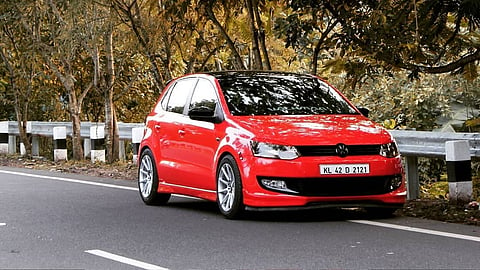

KOCHI: For automobile enthusiast Muhammed Hamras from Kochi, the UDF government’s arrival to power in the state has sparked optimism.
It stems from V D Satheesan’s statement – in the run-up to the assembly election and later in his first press conference after becoming the chief minister – to allow “safe and non-hazardous” vehicle modifications.
Like many youngsters passionate about the culture, the 22-year-old hopes the proposed relaxation will finally allow aesthetic customisation of vehicles without the fear of penalties.
“We are eagerly waiting for the government to enforce the proposal,” said Hamras. “There have been multiple enquiries from young vehicle owners about it. If the government legalises the alterations properly, people can confidently install good-quality alloy wheels and branded accessories without worrying about fines.”
However, amid celebratory media posts and viral videos of the CM reacting positively to questions on modifications, uncertainty persists over how far the proposed relaxations can be extended. Officials at the motor vehicles department (MVD) said the situation is legally complex.
“We have not yet received any detailed circular defining what modifications are officially allowed,” said a senior official. Another official said heavily modified vehicles will still attract fines. “For minor alterations, there is now a lower chance of immediate action,” the official said.
G S Saji Prasad, deputy transport commissioner, Central Zone-II, Ernakulam, said only modifications that do not affect road safety – such as colour alterations or stickers – may be allowed to some extent. “Unauthorised structural modifications remain impermissible under existing law,” he told TNIE.
Retired MVD officer Antony B J said there already exists scope within the law and Supreme Court rulings to allow non-hazardous modifications if proper guidelines are issued.
“Many officers often interpreted court judgments very strictly as there was never a uniform department guideline on alterations,” he said. Antony pointed out that the Motor Vehicles Act (MVA) itself allows certain changes as long as the vehicle’s “basic structures” remain unaffected.
“For example, fitting alloy wheels within permissible limits should not be a problem. Similarly, tyre size can be changed to a certain extent, and repainting or changing the colour of a vehicle is permissible. The law mainly prohibits modifications that alter the vehicle’s basic structures,” he said.
He also noted that Section 52 of the MVA and Rule 112 of the Central Motor Vehicles Rules permit several modifications subject to safety certification and approval procedures.
At the same time, Antony cautioned that the government cannot act outside the framework of the law. “No modification can violate statutory provisions or compromise public safety. If road safety is not affected and there is no direct violation of the MVA, I believe nearly 80% of the modifications preferred by enthusiasts can be legally permitted,” he said.
For now, the proposed relaxation remains more of a political assurance than a formally notified policy.
Money factor
According to retired MVD officer Antony B J, there is an economic side to vehicle modifications. “A large number of people depend on modification-related businesses. A clear policy permitting safe modifications can generate economic activity as well,” he said.
