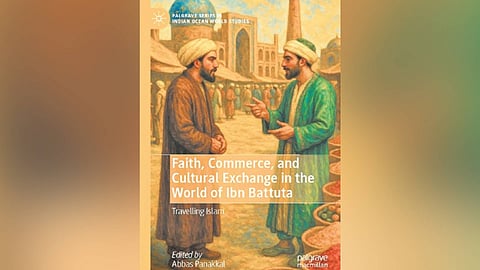

KOZHIKODE: A German writer based in America has unearthed the tragic story of two Muslim kalaripayattu practitioners from Malabar, who set out for Australia, then a British colony, in the 1850s to earn money by displaying their martial art skills.
In his article in the book Faith, Commerce, and Cultural Exchange in the World of Ibn Battuta, William Gilcher juxtaposes the experience of performers from Germany with that of the Malayali duo, who became victims of discrimination and cultural insensitivity.
Mahomet Cassim and his companion Mahomet Abdallah performed for audiences across Australia. “Speaking little English, they stood out from the European colonists by their Muslim religious beliefs as well as their dark skin colour,” says the author.
The locals called them ‘Indian jugglers’ knowing nothing of kalaripayattu. Despite their skill in the martial art, difficulties with communication prompted them to appoint a person from Kolkata as manager. But to their dismay, Cassim and Abdallah one day found that the manager had disappeared with their hard-earned money. In search of jobs, they joined hands with Henry Burton, owner of the National Circus, the most “important enterprise of its kind in Britain’s Australian colonies.”
Musician Michael Gilcher from Germany was the other important figure in the company. “The two Malabaris, after working closely with Michael Gilcher and Henry Burton, became star performers, despite their limited English, drawing large audiences and praise-filled reviews.”
In a twist, the Malayalis were arrested after mortal remains, suspected to be that of their manager, were found at a village in 1863. They were charged with murder and later faced trial in court. After the trial, the duo was sentenced to death. Abdallah’s sentence was later commuted to life imprisonment.
The author recounts the last moments to Cassim’s life “who chose to accept his death as martyrdom.”
‘Malabaris were victims of their otherness’
“He prepared for it by reading the Quran, especially chapters concerned with death.” Abdallah was later released and is believed to have died on the way from Sydney to Ceylon, now Sri Lanka.
According to the author, the Malabaris “were the victims of their “otherness,” due to their limited ability to speak English, their religion, their skin colour, and their general unfamiliarity with the British legal system.”
“Why did one set of traveling performers – Michael Gilcher and his “Little German Band” – flourish in Australia while the other one – the twosome of Cassim and Abdallah – meet such a bitterly sad end?”
Cassim’s body lay in an unmarked grave adjacent to an Anglican cemetery in Goulburn. “We do not know how his family in Malabar reacted to the death of their son on British gallows. We do not know if they ever heard of the strength of character he showed so dramatically at the time of his execution,” William adds.
“One particularly exciting aspect of William’s research has been the discovery of the travel accounts of two people from our region. They were not simply labourers, but skilled performers and experts who participated in acrobatic shows on the international stage,” said Abbas Panakkal, editor of the book.
“Their stories demonstrate that those who travelled across the seas came from diverse social and professional backgrounds and included people with specialised skills and talents,” he said.
