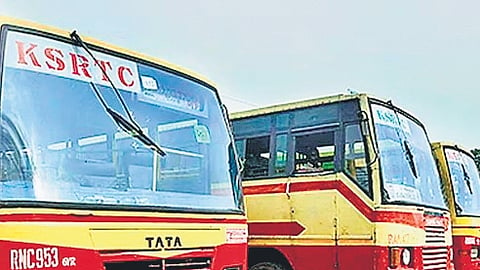

THIRUVANANTHAPURAM: In a major relief to state-owned entities, the state government has extended the registration validity of public sector vehicles from 15 to 20 years. The decision provides a crucial lifeline to the cash-strapped KSRTC, allowing over 1,500 aging buses to remain on the road for another five years and saving flagship rural initiatives like the Priyadarshini scheme from severe disruption. KSRTC has already issued orders to renew permits for vehicles crossing the 15-year mark.
The relief comes as KSRTC faces an acute fleet deficit. Between 2016 and February 2025, the corporation scrapped 2,202 buses while acquiring just 538 new ones, the majority of which were funnelled into its KSRTC-SWIFT subsidiary, leaving the main utility with only 100 new vehicles.
This shortage has created a sharp gap between inventory and operations: out of a registered fleet of 5,765 buses, KSRTC manages just 4,468 active vehicles to cover 4,663 daily schedules. Standard commuting heavily relies on 2,617 ordinary buses, supported by fast passenger and super-fast units. The current extension resolves an impending deadline.
On September 30, 2024, a total of 1,117 KSRTC buses and 153 utility vehicles reached the 15-year limit, prompting a temporary two-year relief from the state. The temporary extension expires on September 30, and Regional Transport Offices had already begun rejecting fitness renewals for KSRTC utility vans.

Staring at an operational crisis ahead of the Sabarimala pilgrimage season, the corporation is now scrambling to lease 63 AC and 600 non-AC buses to bridge the gap. However, the state’s move directly conflicts with the Central Vehicle Scrapping Policy under Rule 52A of the Central Motor Vehicles Rules (CMVR), which mandates the compulsory deregistration and scrapping of all government and public sector vehicles exceeding 15 years.
Transport sector experts remain sharply divided over the legal validity and sustainability of the state’s order. Officials from the National Transportation Planning and Research Centre (NATPAC) contend that the state holds executive powers to grant tailored exemptions for stage carriages to preserve public transport network, pointing to a recent proposal by an expert committee evaluating the private bus sector that recommended extending registration validity up to 25 years.
Conversely, Motor Vehicles Department officials are far less convinced, cautioning that unilateral state executive orders overriding CMVR Rule 52A are legally fragile.