
ALAPUZHA: Looking to explore and tap the tourism potential of Kuttanad, the Union and state governments have joined hands to turn the 24-km-long Alappuzha-Changanassery (AC) canal, one of the longest man-made canals in the state, into a National Heritage and Tourism Waterway.
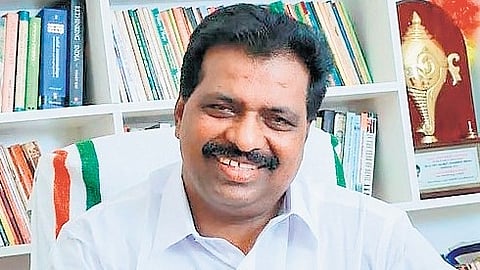
The Centre has asked the state to submit a detailed project report in this regard, said Mavelikkara MP Kodikunnil Suresh.
According to him, Union Minister for Ports, Shipping and Waterways Sarbananda Sonowal has said that necessary measures should be taken in coordination with the state tourism department to utilise the heritage and tourism potential of the canal.
“I had submitted a memorandum seeking the canal's development as a heritage and tourism waterway. The proposal was assessed in consultation with the Inland Waterways Authority of India (IWAI), following which the Union minister conveyed the Centre's favourable response and asked the state government to submit a detailed project report,” Kodikunnil told TNIE.
Constructed in the 1950s, the AC canal was declared a national waterway (NW8) by the National Waterway Authority of India in 2025. The plan is to make it a feeder canal link with the Kollam-Kottappuram NW-3.
According to IWAI's assessment, the canal is navigable, barring a stretch that has a low-level bridge at Kidangara. The Centre has also examined the possibility of making greater use of the canal's existing inland water transport potential for tourism.
Various infrastructure development works have already been undertaken by the IWAI at Pallathuruthy, where the NW-8 begins. These include terminal development, removal of water hyacinth, hydrographic surveys and bank protection works.
Round-the-clock navigation facilities have also been established at 15 locations, Kodikunnil said. The Centre has also sanctioned four HDPE floating jetties at Vaikom, Thanneermukkom, Alappuzha and Kayamkulam to promote cruise tourism along the NW-3.
These facilities can be utilised to develop tourism-based water transport by connecting them with NW-3 and 8, Kodikunnil said.
The Centre also pointed out that the government's intervention would be essential for developing water promenades, rest and recreational facilities for tourists and other onshore infrastructure along the AC canal.
It suggested exploring the possibility of launching cruise services in public-private-partnership (PPP) mode.
“The canal's development can also create opportunities for inland water transport, cruise tourism, local economic development and employment generation,” said K G Padmakumar, director, International Research and Training Centre for Below Sea-Level Farming.
Thomaskutty Mathew, a resident of Champakulam, said the AC canal was proposed by Diwan Raja Kesavadas in 1951. However, in 1959, the government built a 10-km-long canal from Onnamkara to Kidangara along with the construction of an AC road as a single stretch.
Between Onnamkara and Pallathuruthy, the canal is not connected properly. The bridges constructed across the canal connecting Athe C road and paddy fields hindered water transport. However, during the AC Road reconstruction recently, a few bridges blocking the passage of water vessels were rebuilt.
Meanwhile, a new proposal has been made to connect the canal from Onnamkara to Pallathuruthy parallel to the AC road by constructing a new canal between Nedumudi and Jyothi junction.
Another proposal is to connect the AC canal with the Manimala River by widening the Thekkekara-Mankombu canal. The proposals have been submitted to the IWAI.
