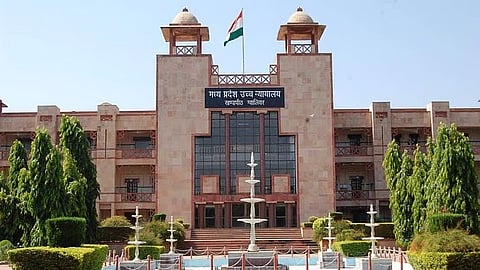

BHOPAL: The Madhya Pradesh High Court on Friday brought a seven-year legal battle over Other Backward Classes (OBC) reservation in the state to a close, ruling that OBCs are entitled to only 14% reservation in government recruitment and higher education, rather than the 27% quota introduced by the Kamal Nath-led Congress government in 2019.
Delivering its long-awaited verdict on more than 90 petitions challenging the 2019 amendment, a double bench of Justices Anand Pathak and Vinay Saraf held that the case did not warrant an increase in OBC reservation from 14% to 27%. The court also directed recruitment agencies to fill posts kept on hold under the disputed 87:13 formula, bringing relief to candidates who have waited years for appointments.
In its 159-page order, the bench observed that the available data on higher education and public services indicated that OBCs were adequately represented under Article 16(4) of the Constitution.
“This case is not about grant of reservation but the extent of reservation,” the court observed, holding that OBCs were entitled to 14% reservation but that the case for increasing it to 27% had not been established.
Citing the Supreme Court’s rulings in Indra Sawhney and Jaishri Laxmanrao Patil, the bench said no extraordinary circumstances or emergent situations had been demonstrated to justify exceeding the 50% reservation ceiling. It, therefore, held that OBC reservation in public services and higher education would remain at 14%.
In a significant direction, the High Court ordered recruitment agencies, including the Madhya Pradesh Public Service Commission and the Madhya Pradesh Employees Selection Board, to complete appointments against 13% of posts that had remained on hold under the 87:13 arrangement/formula since September 29, 2022.
“All recruitment agencies ... shall do the needful for giving appointments to 13% unreserved category candidates within three months as an outer limit,” the bench directed.
The order is expected to bring relief to candidates whose appointments had been delayed by the prolonged uncertainty over the reservation policy.
The court also protected appointments made under the 27% OBC quota between March 2019 and September 29, 2022. OBC candidates appointed during this period against posts exceeding the earlier 14% quota will not be removed from service.
The bench said these appointments would be protected and the posts adjusted or subsumed in the next three recruitment cycles, thereby safeguarding the interests of candidates who had already joined government service.
How the reservation dispute unfolded
The legal battle began in March 2019, when the Kamal Nath-led Congress government introduced an ordinance increasing OBC reservation in Madhya Pradesh from 14% to 27%. The move came ahead of the Lok Sabha elections, prompting critics to question its political timing, given that OBCs constitute a substantial share of the state's population.
Petitions challenging the enhanced quota were subsequently filed in the High Court, with some specifically questioning its application to teacher recruitment. The court imposed an interim stay on implementing the 27% quota in that recruitment process.
In July 2019, the state government amended the Madhya Pradesh Lok Seva (Reservation for Scheduled Castes, Scheduled Tribes and Other Backward Classes) Act, 1994, providing a statutory basis for the increase. The legal challenge, however, continued.
The change of government in March 2020, when the Shivraj Singh Chouhan-led BJP government came to power, did not resolve the dispute. Recruitment agencies continued to face uncertainty over how to proceed while the enhanced quota remained under challenge.
To prevent recruitment from being stalled entirely, the state adopted the 87:13 formula in several selection processes. Under this arrangement, results for 87% of posts were declared, while the remaining 13% were kept on hold pending clarity on the reservation dispute.
By 2022, the withheld posts had become a major source of uncertainty, particularly for selected and waitlisted candidates in government recruitment, including teacher appointments. The issue persisted even as different recruitment-related proceedings produced further legal complications.
The dispute continued under the BJP government led by Chief Minister Mohan Yadav, which assumed office in December 2023. Throughout 2024 and 2025, candidates continued to demand a resolution, while the demand for implementation of the 27% OBC quota remained a prominent political issue.
On August 5, 2026, the High Court reserved its verdict after extensive hearings.
The issue also resurfaced in the political arena last month, when Leader of Opposition Rahul Gandhi wrote to the Madhya Pradesh chief minister, demanding implementation of the 27% OBC quota and a decision on the posts that had remained on hold.
OBC reservation and the politics of Madhya Pradesh
OBC reservation is among the most politically consequential social-policy issues in Madhya Pradesh, where OBCs are estimated to account for around half the population. The community's demographic weight has also been reflected in the state's political leadership. Four BJP chief ministers—Uma Bharti, Babulal Gaur, Shivraj Singh Chouhan and the incumbent Mohan Yadav—have belonged to OBC communities.
When the Kamal Nath government introduced the enhanced quota in 2019, critics viewed the move as an attempt to consolidate OBC support ahead of the Lok Sabha elections. After his government fell in March 2020, Kamal Nath blamed the BJP government for failing to secure the implementation of the enhanced quota, alleging shortcomings in its legal defence.
The BJP, meanwhile, has also backed the demand for 27% OBC reservation. In August 2025, Chief Minister Mohan Yadav, who belongs to the Yadav community, convened an all-party meeting that adopted a unanimous resolution supporting the full 27% quota. He also discussed the government's position with Solicitor General Tushar Mehta.
The High Court's verdict now places the political consensus behind the enhanced quota under fresh scrutiny. The BJP government faces questions over how it will respond to a ruling that rejects the increase it had publicly supported. The Congress, which introduced the quota in 2019, is likely to question the BJP's handling of the litigation, while the BJP can point to the legal and evidentiary challenges surrounding the original decision.
Beyond the political contest, the immediate consequence of the judgment is clearer: OBC reservation in public services and higher education will remain at 14%, while the court-ordered release of the withheld posts is expected to bring long-awaited clarity to thousands of recruitment aspirants.
