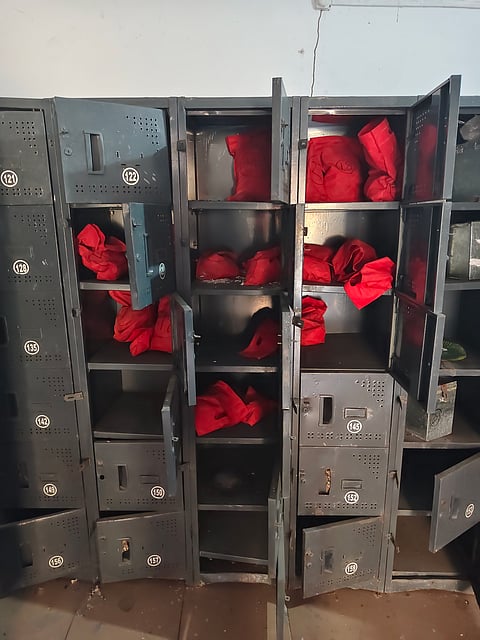

BHOPAL: Ash and bone remnants of the cremated bodies of COVID-19 patients, which had been awaiting immersion in rivers for the last 5.5 years at Bhopal’s Bhadbhada Vishram Ghat (cremation ground), were reportedly immersed in the Triveni Sangam (confluence of the Ganga, Yamuna and the mythical Saraswati rivers) on Saturday.
Ashes and bone remnants of at least 38 bodies, which included around 18 financially weak individuals who were cremated over a year and a half, besides around 20 persons who died during the killer second wave of the COVID-19 pandemic in the summer of 2021, had been awaiting immersion, as their family members did not come forward to take them for immersion in rivers considered sacred to Hindus.
“Finally, on the penultimate day of the Pitra/Shradha Paksh (the fortnight dedicated in Hinduism to ancestors) on Friday, a van carrying the ashes and bone remains of the 38 dead was dispatched by the cremation ground’s management committee, the Bhadbhada Vishram Ghat Samiti, to sacred Prayagraj, where the ashes and bone remains were immersed in the sacred trinity of rivers,” Mamtesh Sharma, the secretary of the committee, told TNIE on Sunday.
The ritual termed Asthi Visarjan (immersion of bone fragments and ashes) in Hinduism acts as a symbolic moment of closure for the bereaved family, returning the physical elements of the body to nature, while for the deceased, it is seen as the process that helps release the physical body and assists the soul on its journey to liberation (Moksha).
The long-awaited immersion of the ashes and bone fragments of the 38 dead (including very poor individuals) happened around five years after the huge quantity of ashes of COVID-19 patients who succumbed to the killer second wave in 2021 was used to create a sprawling forest, Sri Ram Van, on the same cremation ground land, consequently rendering it a crucial source of natural oxygen for the cremation ground and adjoining areas on the outskirts of Bhopal.
“The Bhadbhada Vishram Ghat was designated by the authorities as the cremation ground for all Hindu patients who died due to the deadly pandemic, particularly during the second and deadliest wave, amid the lockdown. Up to 150 bodies were cremated daily. While the deceased’s kin took around 90% of the bone remnants for immersion, the huge hillock of ashes remained unattended.
The authorities gave us the option to take the plethora of ashes (which would have taken at least 30 dumpers to carry them) for immersion in the River Narmada in the neighbouring Narmadapuram district. But, caring for the health of the river as well as the safety of the aquatic species inhabiting it, we decided to use them for a green purpose,” Sharma said.
The cremation ground’s management committee, headed by Arun Chaudhary, then joined forces with city-based social activist Tanmay Jain. The collaborative effort subsequently led to the plethora of ashes of the COVID-19 deceased being mixed judiciously with multiple layers of soil and husk of five kinds to create Sri Ram Van.
Using the trusted Japanese Miyawaki Method for building dense forests quickly, the Van (forest) was subsequently developed within the next few months. The method helped the degraded land grow into a self-sustaining forest ten times faster and 30 times denser than traditional forestry.
The Van, which now has more than 7,200 tall trees, is home to many animal species, including peacocks and even pythons. The Van houses fruit, flower and herbal medicine trees, which have been planted by families in memory of their dead loved ones.
