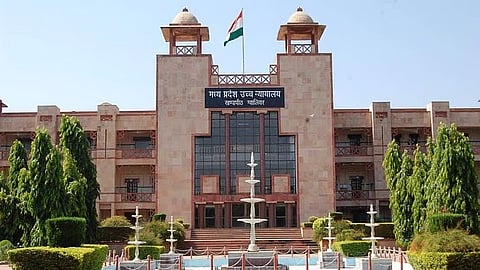

Bhopal: More than seven months after the contaminated-water crisis shook Bhagirathpura, a judicial inquiry ordered by the Madhya Pradesh High Court has now reportedly traced the tragedy to a series of administrative failures, putting the spotlight on officials responsible for maintaining and upgrading the civic water network.
The one-member commission headed by retired Madhya Pradesh High Court judge Justice Sushil Kumar Gupta has completed its inquiry and submitted its report to the Indore Bench of the High Court.
The approximately 600-page report has not yet been made public, but lawyers who were allowed to inspect it have disclosed portions of its findings to journalists.
The most serious finding concerns the deaths investigated by the commission. Of the 36 fatalities examined, 24 have reportedly been directly attributed to consumption of water contaminated with sewage. In the remaining 12 cases, the inquiry could not establish a conclusive link between the deaths and the contaminated supply.
Behind those numbers lies what appears to be a preventable infrastructure failure.
According to advocates familiar with the report, the commission has identified delays in replacing an ageing water pipeline as a key factor. The process of laying a new pipeline to supply River Narmada water was also reportedly held up by delays in tendering and other administrative procedures.
The consequence was devastating. Sewage entered the drinking-water network and reached households in Bhagirathpura, triggering widespread illness and eventually a death toll that prompted judicial intervention.
The report is understood to have examined not only how the contamination occurred but also whether timely action could have prevented the crisis. Lawyers who inspected the document say the commission has concluded that administrative negligence and irresponsible conduct played a significant role.
Advocate Manish Yadav, representing PIL petitioners Mahesh Garg and Pramod Dwivedi, said the inquiry had examined the matter in considerable detail. He said around 200 pages of the report were devoted to its findings.
“Approximately eight to 10 officials have been held culpable,” Yadav said, according to the material emerging from the inquiry. The officials, he said, had been found responsible in connection with their roles and conduct leading up to the incident.
The report, however, appears to draw a line between those officials and several senior functionaries and elected representatives. According to lawyers familiar with its contents, some senior officials as well as elected members and the Mayor-in-Council have not been held culpable.
Meanwhile, the Leader of the Opposition in the Vidhan Sabha, Umang Singhar, has demanded that the entire judicial report be released publicly. He has questioned why accountability, if the reported findings are accurate, appears to rest primarily with government officials rather than extending to political representatives overseeing the municipal administration.
The Congress is expected to raise the issue in the Madhya Pradesh Assembly in the next session, with Singhar arguing that elected representatives cannot simply escape scrutiny when failures occur within the administrative machinery under their watch.
The High Court had ordered the judicial inquiry on January 27, following the outbreak that began in late December 2025. The commission was tasked with examining the source of contamination, the number of deaths, the medical and administrative response, preventive measures and the responsibility of officials.
The report has also reportedly recommended enhanced compensation for victims and proposed measures aimed at preventing a repeat of the crisis.
For Bhagirathpura, however, the central question now goes beyond compensation. It is whether the deaths were the inevitable consequence of a failing urban system—or the foreseeable result of decisions that were delayed when action was still possible.
Until the complete report is made public, that question remains partly unanswered. But the emerging findings have already shifted the focus from the contaminated water itself to the decisions, delays and institutional failures that allowed it to reach people’s homes.
What the reported inquiry findings indicate
36 deaths were examined by the commission.
24 deaths were reportedly directly linked to consumption of sewage-contaminated municipal water.
In 12 cases, the commission reportedly could not conclusively establish that connection.
Responsibility is reportedly being fixed on around 8–10 officials for lapses or irresponsible conduct.
The delayed replacement of the old pipeline and delays in the tendering process for the new Narmada-water line appear to be central findings.
Some individuals reportedly received a clean chit, including, according to lawyers familiar with the report, certain senior officials and elected representatives/MIC members.
The commission has reportedly recommended higher compensation and measures intended to prevent a recurrence.
The report is said to run to roughly 600 pages, with around 200 pages devoted to findings.
