
MUMBAI: The Maharashtra government has leased 1,200 acres of fertile land in Haregaon village in Ahilyanagar district to Mumbai-based Vishwaraj Renewables Private Limited for 49 years through a government resolution (GR).
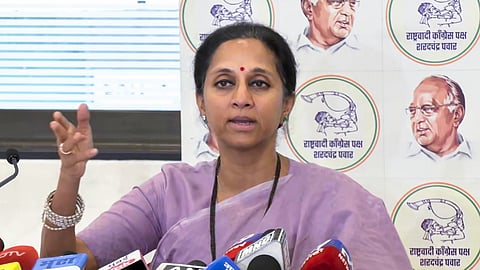
The company is owned by Sarang Lakhani, son-in-law of NCP (SP) Lok Sabha MP Supriya Sule. Sarang Lakhani is the son of newly elected BJP MLC Arun Lakhani, who has close ties with the Rashtriya Swayamsevak Sangh (RSS). The Nagpur-based Lakhani family is also considered close to Maharashtra Chief Minister Devendra Fadnavis and Union Minister Nitin Gadkari.
Interestingly, within a span of two weeks, the Maharashtra government leased out two major portions of agricultural land. The first was 1,500 acres allotted to the Nibe Group, followed by the 1,200 acres leased to the company owned by Sule’s son-in-law. The government has also allotted 1,500 acres to the Defence Research and Development Organisation (DRDO) for defence-related projects.
Under the agreement, the land leased to Sarang Lakhani can be subleased or handed over to a contractor with the state government’s permission. However, the agreement exempts the company from obtaining a no-objection certificate from the agriculture department. It stipulates a monthly lease rent of Rs 4,166 per acre, with an annual increase of 3 per cent.
During the colonial period, the British government acquired more than 7,000 acres of land in Haregaon village in Ahilyanagar for various purposes. After Independence, the original landowners fought legal battles to reclaim their ancestral land.
In September 2026, the state government issued a GR stating that the land could be returned to the original farmers once they submitted valid and authenticated documents establishing ownership.
Meanwhile, the state government decided to allot or lease portions of the British-acquired land for defence and development projects. Of the total 7,000 acres, 4,200 acres have reportedly been leased out, including the 1,200 acres allotted to the company owned by Sule’s son-in-law.
The decision to lease out the land was taken by three ministers in the incumbent government: Revenue Minister Chandrashekhar Bawankule, Environment Minister Pankaja Munde and Industries Minister Uday Samant.
The government had earlier planned to establish a solar power project on the land but subsequently scrapped the plan and leased portions of it to different private entities.
The decision has raised questions about why the state government is leasing ancestral land to private companies at relatively low rates when the original landowners are seeking its return. Critics have described the move as a violation of farmers’ interests and an anti-farmer decision.
Social activist Anjali Damania has raised 10 questions about the state government’s decision to allot the land to a private company without inviting tenders. She questioned why a tender had not been floated for a deal involving such a large tract of land and whether competitive bidding could have secured higher lease revenue for the government.
Damania also said Sule herself should take a proactive role in the matter.
“The state is heavily indebted, yet a huge tract of land has been given to a private firm for a nominal amount. The land should be returned to the original farmers,” she said.
