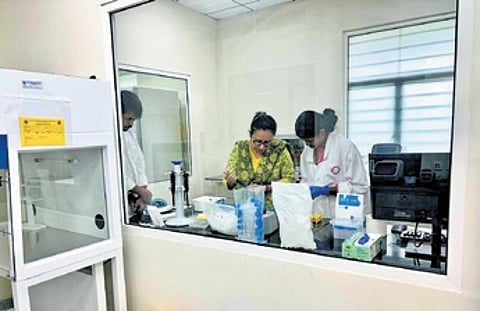

BHUBANESWAR: The Institute of Medical Sciences (IMS) and SUM hospital has become the first healthcare facility in the state to establish a comprehensive in-house molecular diagnostics and genomics laboratory.
The new facility is equipped with next-generation sequencing (NGS), fluorescence in-situ hybridisation (FISH), cytogenetics and a range of molecular diagnostic technologies for the diagnosis, classification and monitoring of cancers, haematological disorders and genetic diseases.
Dr Shivangi Harankhedkar, head of the department of Molecular Diagnostics and Genomics, said, “Genomic testing offers critical information for patients with leukemia, lymphoma, myelodysplastic neoplasms and myeloproliferative disorders by helping establish diagnosis, predict disease outcome and identify mutations that could be targeted with specific therapies. Similar profiling also supports personalised treatment in cancers of the lung, breast, ovary, colon, pancreas, brain, thyroid and prostate.”
Dr Harankhedkar said the laboratory houses advanced sequencing platforms, including the Ion GeneStudio S5 Plus, Illumina MiSeq i100 and Illumina NextSeq 2000, enabling targeted genetic testing as well as whole-exome and transcriptome sequencing. Supporting infrastructure includes PCR and real-time PCR systems, nucleic-acid quality assessment equipment, FISH imaging, cytogenetic processing facilities and Sanger sequencing, she informed.
Medical superintendent Dr Pusparaj Samantasinghar said the facility would significantly reduce delays caused by transporting patient samples to distant laboratories while ensuring better sample quality and faster reporting, particularly benefitting patients from remote parts of Odisha.
