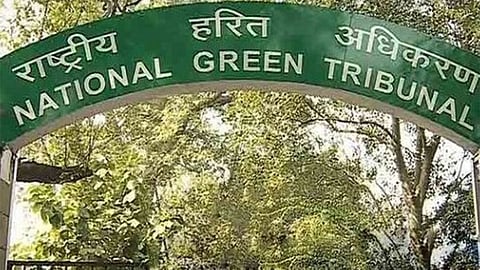

CUTTACK: The National Green Tribunal (NGT), East Zone bench, has issued a series of directions to the Odisha government and regulatory authorities for strengthening the monitoring of groundwater contamination and ensuring uninterrupted supply of safe drinking water to residents of Sukinda area in Jajpur district.
The bench of judicial member Arun Kumar Tyagi and expert member Ishwar Singh passed the directions while disposing of a petition filed by Mantu Das, a Jajpur-based social activist, who alleged that industrial activities, including chromite mining, had severely polluted groundwater and exposed local residents to serious health risks.
The tribunal noted that a joint committee constituted by it had found that the extent of contaminant transmission in groundwater required further investigation. During the hearing, advocates Sankar Prasad Pani and Ashutosh Padhy appeared for the petitioner, while special counsel Padmesh Mishra represented the state government.
Referring to an affidavit filed by the Jajpur collector, the tribunal recorded that a mega piped water supply project in Sukinda block was fully functional and safe drinking water complying with BIS standards was being supplied through functional household tap connections. It also noted that 22 contaminated hand pumps had been permanently sealed in December 2025.
However, the bench observed that the Central Ground Water Board (CGWB) study detected hexavalent chromium [Cr(VI)] levels above the permissible limit of 0.05 mg/l in 37 groundwater samples during the pre-monsoon period and 28 samples during the post-monsoon season.
“The CGWB has not identified the causes and the collector and district magistrate, Jajpur has not mentioned the remedial measures taken pursuant thereto,” the tribunal observed.
The NGT directed the principal secretary of the Forest, Environment and Climate Change department, Jajpur collector and the Rural Water Supply and Sanitation (RWSS) division to expand and strengthen safe drinking water schemes. It also ordered periodic testing of supplied water, identification and closure or treatment of contaminated wells and hand pumps, installation of arsenic removal plants in affected villages, and regular inspection of effluent treatment systems in chromite mining industries.
