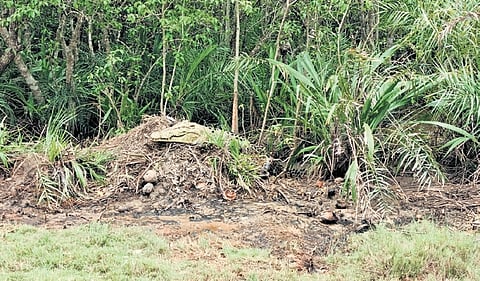

KENDRAPARA: At least 117 active estuarine crocodile nests have been recorded in Bhitarkanika National Park during this year’s annual nesting survey.
Conducted between May 1 and June 30 by frontline forest staff across all wildlife ranges of the park, the survey found one more nest than last year’s count of 116. Kanika wildlife range accounted for the highest 106 nests, followed by Rajnagar with 10 and Mahakalapada with one.
The annual survey forms a crucial part of the long-term monitoring programme for estuarine crocodiles, helping officials assess breeding success, identify key nesting habitats and strengthen protection measures.
According to divisional forest officer (DFO) Varadaraj Gaonkar, the consistently high nesting figures over the past five years indicate the effectiveness of habitat protection, scientific monitoring and sustained conservation initiatives undertaken by the Forest department.
“The Forest department remains committed to conserving the estuarine crocodile population and the unique biodiversity of Bhitarkanika mangrove ecosystem through scientific management, habitat protection and community participation,” said Gaonkar.
Counting crocodile nests in Bhitarkanika, India’s second-largest mangrove forest after the Sundarbans, is a challenging and risky task due to the presence of large crocodiles in creeks and dense mangrove vegetation. Female crocodiles aggressively guard their nests during the nesting and hatching season, making the exercise particularly hazardous. Around 30 trained forest personnel with expertise in crocodile behaviour participated in the survey, the DFO added.
Bhitarkanika is home to 1,858 crocodiles as per the reptile census report of January 2026. To minimise disturbance during the breeding season of crocodiles, the Forest department closes Bhitarkanika National Park to tourists from May 1 to July 31 every year.
