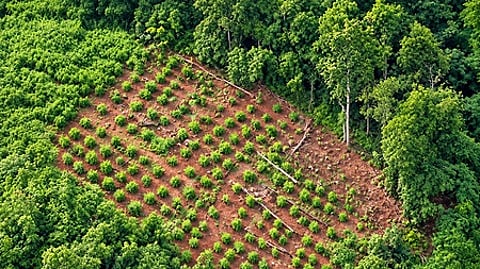

BHUBANESWAR: In a bid to wean farmers away from lucrative but illegal ganja cultivation, Odisha Police has proposed setting up a dedicated agency to promote alternative farming in six cannabis cultivation hotspots across the state.
The agency will function as a project management unit (PMU) under the Anti Narcotics Task Force (ANTF) and facilitate the transition of traditional ganja cultivators to viable and profitable cash crops. The six districts identified for the initiative are Malkangiri, Koraput, Rayagada, Gajapati, Kandhamal and Boudh.
In a letter to additional chief secretary, Home department, Hemant Sharma, ADG (Modernisation) SK Priyadarshi said law enforcement alone could not provide a lasting solution to the problem. He stressed the need to offer cultivators sustainable livelihood options through alternative cash crops.
The PMU will function under the direct supervision of the ANTF DIG, who will act as the nodal officer and report to the ANTF/STF IG. A specialised professional agency will be engaged to manage the unit and coordinate the multi-departmental initiative.
The agency will work with the Agriculture, Horticulture, Soil Conservation and Forest departments to identify suitable alternative crops based on soil conditions, climate and market access. The proposed crops include turmeric, ginger, cashew, coffee, pineapple, other fruit crops, millets, vegetables and minor forest produce.
It will establish demonstration plots in affected villages, organise farmer training camps and exposure visits, and facilitate access to government schemes covering agricultural inputs, irrigation, crop insurance, credit and marketing. Farmers will also be linked to farmer producer organisations (FPOs) and buyers to ensure better market access and remunerative returns.
The initiative will include awareness campaigns on the legal consequences of illegal cannabis cultivation and the economic prospects of alternative crops. Vulnerable villages will be identified using drone data, while meetings will be conducted in local tribal languages to explain that ganja cultivation is punishable under the NDPS Act and can lead to registration of cases, arrests and attachment of property.
The police have also proposed sensitising government officials and Panchayati Raj Institution members about their statutory responsibilities under the NDPS Act to report illegal cultivation and coordinate with enforcement agencies to prevent it.
The Agriculture and Farmers’ Empowerment department will be requested to nominate a state-level nodal officer and district-level nodal officers, preferably deputy directors of agriculture or district horticulture officers, to prepare crop plans, oversee demonstration plots and training programmes, and connect farmers with government schemes.
The scale of the challenge is evident from the extent of eradication operations. According to the Revenue and Disaster Management department, Odisha Police destroyed illegal cannabis cultivation spread over 36,508.792 acres across the six districts during 2025-26. Of this, 6,632 acres were on government and revenue land.
The PMU will also design a separate drug awareness module for school and college students in districts affected by drug misuse and cough syrup abuse.
The three-year project is estimated to cost Rs 16.68 crore, including over Rs 5.03 crore towards PMU management expenses and Rs 11.63 crore for awareness campaigns and field-level activities.
The initiative is aimed at achieving complete eradication of illegal cannabis cultivation in the state by December 31, 2029, in line with the target set by the Ministry of Home Affairs.
