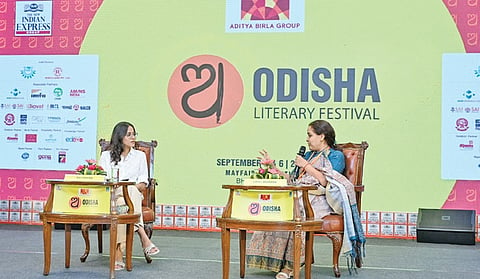

BHUBANESWAR: India’s Gen Z is different from the western or euro-centric definition of the generation and has its own distinct digital story, said author Ria Chopra at the Odisha Literary Festival-2026.
Speaking at the session titled ‘Never Logged Out: Growing Up Online’, moderated by consultant and author Lipika Bhushan, Chopra said there is no universally accepted scientific definition of the years that constitute Gen Z.
“If you were born in 1996, according to the Australian census, you are Gen Z. According to the American census, you are not. And in India, it’s like vibes,” she said, pointing out that it remains unclear whether those born in 1996, 1997 or even 2010 should be considered Gen Z.
The lack of a fixed definition, she said, has wider implications. When Gen Z is described as ‘the loneliest generation”, it is important to ask exactly whom that description refers to.
Chopra stressed that India’s Gen Z is a highly heterogeneous cohort. An American born in 1999 the same year as her, she said, would have grown up in a very different online environment. Even within India, the experiences vary sharply.
“A young person in an urban setting may have grown up with the internet, while someone in a rural area may have first accessed it around 2016, following Jio revolution. These differences make us a very heterogeneous cohort,” Chopra said.
Chopra said much of her own understanding of internet culture initially came from Western publications such as BuzzFeed, The New York Times and Vice, as coverage in India was still nascent five or six years ago. While such coverage has grown, she said Indian newsrooms still do not take the subject as seriously as they should.
Discussing algorithms, Chopra said many frustrations among young people originate in the offline world - from failures in education, healthcare and journalism to government inaction and the climate crisis including Air pollution. Online spaces, she said, have become places to organise, communicate and build communities, with digital mobilisation often translating into offline action.
However, she warned that these platforms are not neutral. “Algorithms are designed to keep users engaged and can amplify anger, rage bait, consumerism and increasingly extreme viewpoints. Content suppression and platform interests can also influence what users see,” she opined.
This, she said, can create ideological bubbles, deepen hyper-individualisation and contribute to loneliness. AI makes it worse as it tends to validate users’ views,by agreeing with them and strengthening their beliefs without necessarily challenging them.
Chopra also said that social media though called ‘social’ cannot fully satisfy the human need for real conversation and connection.
Excessive screen use also contribute to loneliness, isolation and a growing distance from real-world communities, she said, while urging youngsters to limit their screen-time as she dose though app timer.
