
NAGAPATTINAM: A team of archaeologists have found several important artefacts dating back to the Chola period (10th century AD) during a field study in and around the villages at Nagapattinam.
Following the major findings in Kazhukkanimuttam near Mayiladuthurai a couple of months ago, in which panchaloha idols and 86 Chola-period copper plates were unearthed, Sridhar, principal commissioner of archeology, Tamil Nadu, had directed the officials to carry out extensive field study in the surrounding villages.
A team conducted a field study in Sembianmahadevi, Pappakovil, Aavaraani, Alangudi and Sikkal villages.
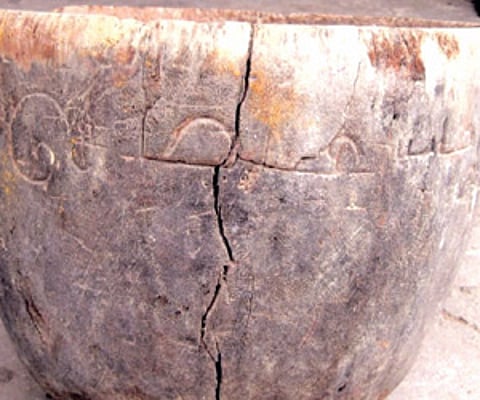
At Sembianmahadevi, the team found a big wooden paddy measure (marakkal). It contained the inscription Sembian Mahadevi Pannai, indicating the agricultural farm owned by Queen Sembian Mahadevi, grandmother of Rajaraja I. There was also a trishul-like inscription below the name.
At the ancient Shiva temple at the same village, the team found three big oil containers made of clay. Two of them are believed to have been moulded in China.
“The presence of these artefacts indicate trade contacts between the Cholas and the Chinese,” Muthusamy said. On the banks of the temple pond, a big lamp tower was also found.
“At the nearby Pappakovil, a granite stone slab, measuring 10 feet in length and five feet in breadth, was also found. It could have been installed for the convenience of traders in transit to place their luggage while taking rest under tree shades,” Muthusamy added.
Muthusamy pointed out that the findings when studied along with other Chola-period inscriptions and historic accounts clearly brought out the fact that the area between Kaduvaiaru and River Odambokki (in which the above villages are located) in Nagapattinam was a flourishing spot for agriculture and trade during the Chola period.
“In addition, Nagai and Tiruvarur towns were connected through a separate road, used mostly by traders,” he said.
