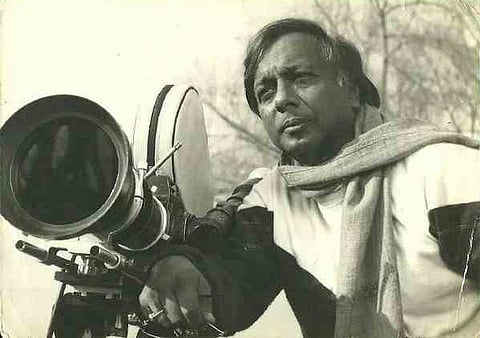

CHENNAI : Forty minutes before the hands on the clock rang in Deepavali, ace cinematographer and cameraman Ashok Kumar Agarwal passed away at his home in Guduvancherry. Indubitably the genius who crafted the visual scenery in films like Rajinikanth’s Johnny, Mannan and even Shankar’s extravagant film Jeans, Ashok had been in and out of hospitals over the last six months. Last May, he was kept on respirator at SRM Hospital and his condition was critical - but he managed to slug it out for another five months, before he finally succumbed to a nerve-related illness. He was 70.
A week ago, he had been shifted from the hospital as doctors had told the family that the end was imminent. His son Akash had sent word to members of industry bodies, directors and actors that his father’s time was running out and urged them to ‘render support in this difficult time’. What was truly saddening was the absence of members of the film fraternity before his last rites were performed on Wednesday evening. “When he was in his prime, my mother remembers how directors and actors would constantly come to see him, discuss films with him, want to work with him and even party with him. But today, hardly anybody came to pay their respects. I don’t know what sort of world we live in,” said Akash, who had been tending to Ashok during his last days. “Maybe they were just not fortunate enough to get his blessings,” he added.
Editor Lenin and a few of his old assistants were among the smattering that made it. “I don’t know if it was the rain or the distance to Guduvancherry or the fact that it was a death on an auspicious day,” he queried, shaking his head.
They did manage to send their virtual tributes to the visual master though.
P C Sreeram tweeted, “He was one of India’s finest Directors of Production. His work was a great inspiration to me when I was studying at the film institute.” Pratap Pothen, the actor who worked closest with Ashok during his wonder years wrote a lengthy tribute on his Facebook page, “He was the first one who captured my face on film. I met him on the sets of Aarvam in Hogennekal, and his magic camera made me what I am today. He was a simple man who had no airs and was lightning fast with his work. The visuals he took never overshadowed the film and that is why the legendary Balu Mahendra named him as his favourite cinematographer. I am lucky to have lived and laughed with him.”
The only thing that lifted Akash’s spirits though was when he was looking for someone to fill out the death certificate requisition form, that was in Tamil. “I was directed to a man who ran a petty shop near the Corporation office here. When he read the name, he picked up the evening paper and asked if the man in the article was my father. When I confirmed it, he became overjoyed and started talking about how he had enjoyed the way my father had captured flowers in the film Uthiripookal. This is my dad’s legacy,” he related.
Ashok Kumar, who had a prolific career stretching from the late 60s to the turn of the century, had worked with everyone from Rajinikanth to Mike Mohan. Having worked as cinematographer in over 120 films, he directed six films with moderate success. He won a national award for his work in Suhasini and Sharath Babu’s film Nenjathai Killathe (1980), which ran for a whole year and was a critical and commercial success. Ashok also had the unique distinction of having worked on My Dear Kuttichathan, India’s first 3D feature film.
