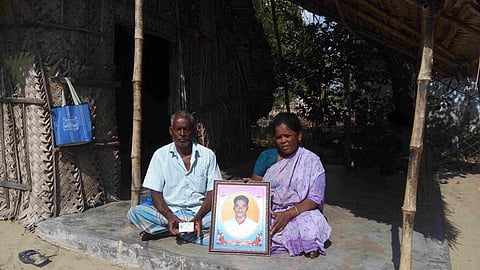

Nagapattinam: R Panneer (32), a fisherman for more than a decade from Aarkattuthurai hamlet petrified over the frequent apprehension of Sri Lankan navy and equally distressed with the depleting fisheries had opted to work as a labour in a plastic manufacturing plant at Malaysia for changing his fortunes. However, the decision of a fisherman to leap over the Bay of Bengal waters rather than fishing despite all odds in the same water to improve his family's economic stature came down crashing on February 6, 2016 as his wife received a phone call from Malaysia informing that her husband was killed in a work accident. A month after the mishap, Panneer's family still waits for
| 46,000 Pieces of Floating Plastic |
| According to a report by United Nations Environment Programme, it is estimated that every square mile of oceans have about 46,000 pieces of floating plastics. Even as 85 percent of the world fisheries were over exploited according to World Wide Fund for Nature (WWF) report, the presence of unsustainable plastic wastes are most likely to aggravate the depletion in marine ecology. |
the body of 32-year-old former fisherman and his insurance sum while the fellow fishermen of Aarkattuthurai near Vedaranyam strongly believe that more such Panneer would emerge and fall prey as fisheries resources are drastically depleting in the past five years. Citing the fishes that migrate to healthier waters in search of feeds, fishing hamlets in tearful note acknowledge that the troubled fishermen are migrating in search of good fortune in safe waters.
The deceased man Panneer (passport number: L2945865) son of Raman hailed from Aarkattuthurai fishing hamlet near Vedaranyam was identified by his fellow fishermen as a craftsman in fishing Barracuda fish (Sheela) in the 27 nautical mile waters between the Vedaranyam coast and northern coast of Sri Lanka. However, by November 2014, owing to the depleting marine wealth forcing the fishermen of Vedaranyam to return shores without catch or to get trapped by Sri Lankan navy, Panneer after paying a sum of `80,000 through a local agent in Tiruchy was said to have flown for Selangor state in Malaysia for working as a labour in a private firm Vickrah plastics. After being employed as labour for more than a year, as not even the break-even point was attained by the victim in earning `80,000 that he spent for his job by pledging his wife's jewels, on February 6, 2016, the family members here in a thatched hut received a phone call from Malaysia informing that Panneer was killed in a work accident. “We were told on February 6 that Panneer was trapped in a machine punching plastic products the previous night. He was a fine fisherman but now, a month after his gruesome death, we are yet to receive his body for performing final rites. There was no improvement in the diplomatic measures and we are also afraid that we won't get our compensation.” R Balakrishnan, 60-year-old father-in-law of victim told Express.
| Bottom Trawlers Most Injuries to Marine Wealth |
| According to senior most fishermen, the bottom trawlers (prevalent use in TN coast) introduced to the fishermen here by the then governments in late 1970's were said to have played a crucial role in World War II as minesweepers for the British navy to remove explosive mines from sea bed. Fishermen said that metal plates would be tied to the corners of fishing nets mostly seine nets so that the fishing net would land at sea bed, and later on, the mechanised boats would trawl the seas to net heavy catch and thereby affecting the coral reefs and rocks that function as safe haven for fishes. |
A month after fisherman Panneer's death, as the family runs pillar to post seeking diplomatic help to retrieve the body and so a fair compensation, the worries of fellow fishermen in Aarkattuthurai tells another tale. In past a decade, the mechanised boats venturing from Aarkattuthurai has come down by 65 per cent and similarly the fishing community involved in the traditional work has come down by 36 per cent according to the local fishermen, thanks to depleting fish resources. “Nobody sees the fishermen dispute scientifically and also attempts to address the issue logically. We are being detained only because of the poor availability of fishes in our waters and that's the same reason why a section of fishermen brothers are moving to safe shores. Though we do not know any other employment than fishing, we are abandoning our boats only to feed or families.” M Murugaiyan, friend of deceased fisherman Panneer emotionally records.
Akin to the victim Panneer, fishermen of Aarkattuthurai acknowledge that there are dozens of fishermen turned labourers employed in Gulf and South East Asian jobs doing menial jobs as the waters here no longer accommodates the fishes. “Most of the fishermen turned labours are working as bonded workers in such manufacturing firms. They were paid low and they would be allowed to return home only after a period of five years. Even in the case of Panneer, neither the Indian Embassy officials in Malaysia nor the management of the private firm he worked are helping us to receive the body. Such struggles never going to stop, instead more such Panneers would flock abroad as we have no other options.” M Murugaiyan added.
As the deceased man's family awaits the victim body to perform final rites and compensation provided if any to educate the victim's two children namely Bhavashree (10) and Rohit (8), the fellow fishermen of Aarkattuthurai painfully records that situation would turn far worse in another five years as the fisheries are depleting drastically owing to the climate changes and also unfriendly fishing practices of a section of fishermen.
