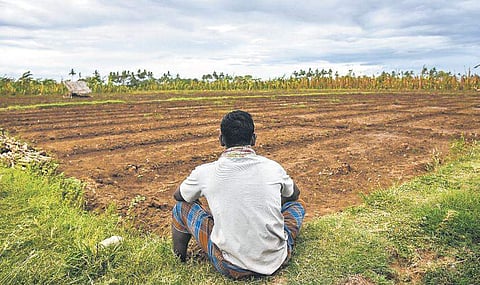

RAMANATHAPURAM: With deficit-monsoon rainfall affecting samba season cultivation, farmers across the district have submitted a petition to district collector Johnny Tom Varghese seeking steps to announce the crops as drought-affected and sanction compensation for the farmers. The collector has now deputed a special team to assess the damages.
Over 1.3 lakh hectares in the district were used for samba paddy cultivation this year. Excluding some areas that directly receive water from the Vaigai river irrigation system, most farmlands in the district rely solely on rainfall. Though the district had witnessed widespread rainfall before the monsoon, once the season began the clouds refused to part on most days. Thus, the paddy crops in several areas, including Thiruvadanai, Mudukulathur and Kadaladi, wilted.
Speaking to TNIE, Bakkiyanathan, a farmer and activist from Ramanathapuram, said, "Owing to irrigation woes, lots of samba crops that reached flowering stage withered away. Farmers spent nearly Rs 30,000-Rs 32,000 per acre of cultivation and are now facing huge losses. Considering this a natural disaster, the state government should provide Rs 32,000 as compensation for each acre in addition to 100% crop insurance amount at the earliest."
Collector Johnny Tom Varghese said that based on the farmers' petitions, officials from the revenue and agriculture departments have conducted a preliminary inspection to assess the situation. Meanwhile, the district received moderate rainfall in the past couple of days, and farmers said if the rains continue for a few more days, their crops could be saved.
