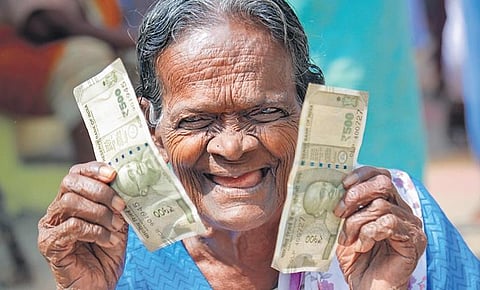

CHENNAI: Women heads of poor rural households in the state are likely to be covered in the first phase of distribution of a monthly honorarium of `1,000, a key poll promise of the ruling DMK.
Chief Minister MK Stalin is expected to announce the launch of the scheme in the budget for 2023-24.
The Participatory Identification of the Poor (PIP) survey completed recently by the Tamil Nadu Corporation for Development of Women, an agency under the rural development and panchayat raj department, identified impoverished households headed by women in rural areas. Its findings have been integrated with the Tamil Nadu Integrated Poverty Portal Service and this will serve as the primary source to select beneficiaries of the scheme, multiple state government sources confirmed.
The PIP survey divides rural families into very poor, poor, middle-class, and rich. Its 30 questions are designed to assess socio-economic information, including education, housing, number of earners, land ownership, details of livestock, use of electrical equipment and vehicle ownership. It was originally conducted to identify beneficiaries to aid self-help groups.
Sources said living standards are considered an appropriate indicator of poverty. “The survey recorded annual household income in accordance with the Union government’s guidelines. However, the state government does not consider this to be a significant criterion to measure a family’s poverty,” an official said.
Final eligibility criteria to be revealed at launch: Official
“If a person earning Rs 15,000 a month does not spend it to enhance their standard of living, it means the money is used to pay off debts or other loans. So they would still be classified as poor if other criteria are met,” explained the official. A rural development officer said that families under the middle and rich categories are not eligible for any schemes intended for the rural poor.
The beneficiary list will depend on how many are identified as poor or very poor and also benefit from other pensions. There are 1.14 crore ration cards issued to the poor in the state. As of last July, 34.27 lakh received a pension of Rs 1000 under nine categories. “A majority of AAY cardholders are already enrolled in the old age pension scheme. The final eligibility criteria for the honorarium will be revealed at the time of launch,” said a revenue official.
Economist Venkatesh Athreya said the criteria should be made transparent. “A third-party audit for the implementation of the scheme would help to ensure it achieves its intended purpose,” he said. Corporate companies were granted tax waivers amounting to lakh crore rupees under the guise of attracting investments, but no study is conducted on the number of jobs created by the measure, he said.
K R Shanmugam, director and professor at Madras School of Economics, said providing a basic income for the poor will increase their purchasing power and save them from the debt trap. “The state should reduce debt and interest paid towards loans. The Centre allows states to borrow loans upto 3.5 % of GDSP, but states should ensure a fixed 3% fiscal deficit and reduce revenue deficit to minimum.