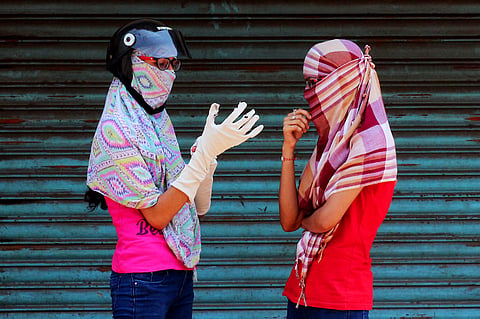

CHENNAI: Adding to concerns of heatwave-like conditions prevailing in parts of the state post April 10, a Delhi-based think tank has flagged “very high” risk to voter safety in the upcoming Assembly election due to rising temperatures, high humidity and erratic rainfall patterns.
A new analysis by Climate Trends of April weather trends between 2021 and 2025 shows that TN recorded some of its highest temperatures in recent years, continuing a long-term warming trajectory of (+)0.68 degree Celsius per century (1901-2023). The state is also witnessing a steady rise in minimum temperatures, particularly in coastal districts, amplifying night-time heat stress.
Humidity, in particular, is emerging as a critical multiplier. Tamil Nadu has been placed in the “very high” heat stress category, with coastal regions increasingly experiencing wet-bulb conditions, where high moisture levels significantly reduce the body’s ability to cool itself. This combination of heat and humidity is expected to peak through April, coinciding with the polling period.
Rainfall variability adds another layer of uncertainty. Data show sharp swings from a 63% deficit in 2024 to a 60% excess in 2025 alongside a rise in heavy rainfall events. Even as heat dominates, this increases the likelihood of sudden pre-monsoon showers and localised disruptions, the think-tank stated.
It is against this backdrop that the Assembly election is scheduled, placing climate risk at the centre of election management. With polling typically scheduled during peak daytime heat, data indicate a “very high” risk to voter turnout and safety in Tamil Nadu due to extreme heat and humidity. The Regional Meteorological Centre has already indicated that post-April 10, heatwave-like conditions are likely in north coastal and interior districts.
“These evolving climate conditions could directly impact the election in several ways, including reduced voter turnout due to heat and discomfort, heightened health risks for voters and polling personnel, and operational disruptions caused by extreme weather events,” said Mahesh Palawat, V-P (Meteorology and Climate Change), Skymet Weather.
Former chief election commissioner OP Rawat said authorities have begun factoring in climatic conditions. “Keeping temperature rise in mind, polling starts early in the morning and continues till evening. Tools like polling station trackers help manage crowding, and provisions such as home voting for persons with disabilities, are aimed at reducing exposure,” he said.
Roxy Mathew Koll, climate scientist from the Indian Institute of Tropical Meteorology, attributed the rising heat to sustained warming of the Indian Ocean. “In fact, the Indian Ocean has warmed more rapidly than any other tropical basin, with parts of the western region warming by more than 1 degree Celsius during the 20th century. This has altered moisture convergence zones and increased atmospheric water vapour content, all of which influence pre-monsoon convection,” he said.
