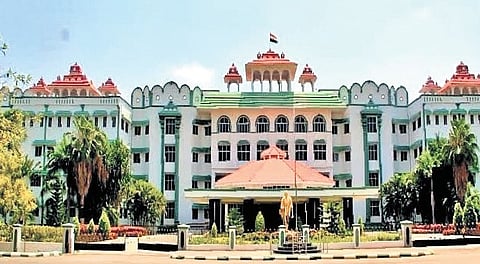

MADURAI: Observing that the tragedy of transgender persons lies not in their birth but in the blindness of society, the Madurai Bench of the Madras High Court recently directed the state government to formulate a comprehensive rehabilitation scheme for transgender persons at the taluk level.
The scheme should ensure avenues for self-employment and sustainable livelihood, restoring the dignity and meaningful inclusion of transgender persons in society, along with necessary welfare schemes tailored to their specific needs, Justice KK Ramakrishnan said.
The judge gave the direction while hearing an anticipatory bail petition filed by YouTuber V Sarathkumar, who was booked by the Srivilliputhur town police for publishing a video about a transgender person who died by suicide within the premises of the police station in January, alleging that the deceased person took the extreme step because the police did not address the grievances of the transgender community.
The judge allowed the petition after noting that the petitioner had merely shared the video, which had already been disseminated by several other persons. However, he expressed great anguish over the continued stigma faced by transgender persons in society, which deprives them of basic dignity and meaningful employment opportunities.
There is a total failure of society’s collective conscience to embrace diversity with empathy. The absence of patience and tolerance in society cannot be a ground to deny them dignity, the judge observed.
“Tragedy is not in their birth, it is in the blindness of society which, by exclusion and prejudice, has driven them into conditions of extreme marginalisation such as being driven to beg on the streets or to engage in activities inconsistent with societal norms merely to secure their livelihood,” he said.
Noting that taking judicial notice of the social exclusion and psychological distress suffered by transgender persons, the Supreme Court had issued a series of directions to states in 2014, the judge observed that these have not been effectively implemented by TN. Stating that the continued inaction on the part of the State undermines the mandate of Articles 14, 15, 16 and 21 of the Constitution of India, the judge issued the direction.
