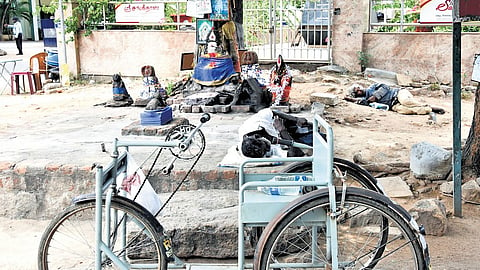

CHENNAI: The allocation for the Department for the Welfare of the differently-abled has seen only a marginal increase in the budget, drawing criticism from activists who said the hike was inadequate to address the needs of persons with disabilities (PwDs).
Finance Minister N Marie Wilson announced an allocation of Rs 1,485 crore, marking an increase of Rs 14 crore (0.95%) over the interim budget allocation of Rs 1,471 crore and Rs 53 crore (3.7%) over last year’s allocation of Rs 1,432 crore.
Among the key announcements, the government said it would provide financial assistance of up to 50% of the cost of AI-based assistive devices or a maximum of Rs 30,000 for equipment not covered under existing schemes.
The budget also announced the establishment of ‘Nambikkai Illam’, government institutions for persons with intellectual disabilities, in Thanjavur, Tiruvannamalai, Salem, Cuddalore, and Virudhunagar.
With an allocation of Rs 4 crore, the centres will provide special education, rehabilitation and vocational training for children aged three years and above.
Speaking to TNIE, Meenakshi Balasubramanian, a member of the Disability Rights Alliance and Senior Associate at the Centre for Inclusive Policy, said, “Sixty per cent of PwDs are unemployed because we do not have equal opportunities, and many of us do not have access to government schemes. In such a scenario, the government should provide these devices free of cost or at subsidised rates.”
Gopal Rajendran, vice-president of Tamil Nadu Association for the Rights of All Types of Differently-Abled and Caregivers (TARATDAC), Vellore, also expressed disappointment at the absence of any announcement to increase the monthly financial assistance for PwDs. Activists have long demanded that it be raised from Rs 1,500-Rs 2,000 to Rs 6,000, on par with Andhra Pradesh, he added.
Boost for SHGs
‘Singappenngal Valimaippaduthum Thittam’ announced for Women Self Help Groups. An investment subsidy of Rs 5L will be given & a target of Rs 38K cr has been fixed in Annual Credit Plan
