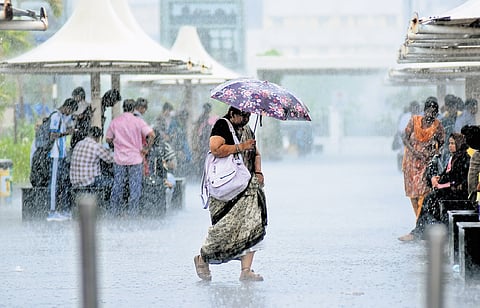

CHENNAI: Most parts of Tamil Nadu are likely to receive normal rain in July, offering favourable conditions for agriculture, water resources and reservoir inflows, even as the state is expected to experience above-normal daytime and night-time temperatures, according to the India Meteorological Department’s (IMD) monthly outlook.
The Regional Meteorological Centre (RMC), Chennai, said parts of the Western Ghats and adjoining western districts have a higher probability of receiving above-normal rainfall, while a few isolated pockets may witness below-normal rainfall during the month. The outlook also cautioned localised heavy rains are likely over the Western Ghats and neighbouring districts.
The rain forecast is expected to benefit the ongoing agricultural season and improve inflows into reservoirs across the state.
However, IMD clarified the monthly outlook is probabilistic in nature, indicating only the most likely rainfall category, and should not be interpreted as the actual rainfall amount or as district-specific forecast.
Alongside favourable rain prospects, the weather agency has forecast above-normal maximum and minimum temperatures across most parts of Tamil Nadu during July. Interior districts are likely to experience relatively warmer daytime conditions, while coastal areas may see slightly moderated temperatures because of the sea breeze.
Nevertheless, temperatures across the state are expected to remain above climatological normals.
Night-time temperatures are also expected to remain above normal, resulting in warm and humid conditions, particularly along the coast.
Although active spells of the southwest monsoon may bring temporary relief, warm and humid weather is likely to persist over much of the state through the month.
The IMD has advised farmers, water resource managers, disaster management authorities and the public to rely on district-level weather forecasts, agrometeorological advisories and official weather warnings for planning and preparedness.
It also urged people to stay hydrated, avoid prolonged exposure to direct sunlight during peak afternoon hours, and take special precautions for children, the elderly, outdoor workers and other vulnerable groups as above-normal temperatures continue through July.
