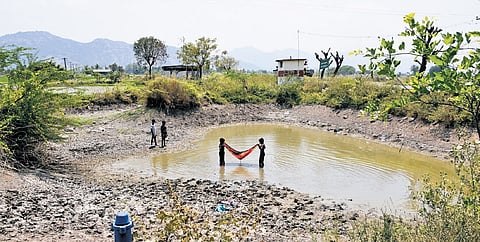

CHENNAI: The state government has decided to permit general public, including farmers, to restore minor irrigation tanks and ponds in rural areas. As part of the initiative, they will be allowed to remove and use clay, silt, and other excavated materials free of charge for agricultural, domestic, and other approved purposes.
To facilitate this, Rural Development and Panchayat Raj Minister N Anand on Tuesday issued comprehensive guidelines expanding community participation in the restoration of rural water bodies. The guidelines integrate existing provisions permitting the removal of silt and clay from rural water bodies with the department’s tank restoration programme.
Until now, restoration works such as desilting and deepening of tanks maintained by panchayat unions and village panchayats have largely been carried out through corporate social responsibility (CSR) funds and support from NGOs, community organisations and educational institutions.
Under the revised guidelines, members of the public, who are already permitted to remove silt, clay and savudu from water bodies for agriculture, pottery making and other approved purposes, can now directly undertake restoration works.
The provision is based on a G.O issued by the Industries Department on April 27, 2017, amending the Tamil Nadu Minor Mineral Concession Rules. “We have now integrated the provisions of G.O (No. 50) with the tank restoration programme. Companies, institutions, NGOs and community organisations can continue to execute restoration works entirely with their own funds, provide financial assistance to the district administration, or supply machinery and equipment required for the works.
In addition, members of the public can now undertake restoration by deploying their own machinery and equipment and, in return, remove the excavated earth and other materials free of cost,” a senior official said. The move is expected to help address the shortage of earth, clay and sand used for agricultural activities, pottery making and other purposes across the state.
According to the guidelines, individuals and community organisations interested in undertaking restoration works must sign a Memorandum of Understanding (MoU) with the respective district collector before commencing the project. Last year, around 5,000 minor irrigation tanks and ponds across Tamil Nadu were restored in partnership with NGOs and private companies.
“We expect to restore a similar number of tanks and ponds this year as well,” the official added. The restoration programme aims to improve groundwater recharge, enhance water storage capacity for drinking water and irrigation, and expand the area under cultivation.
