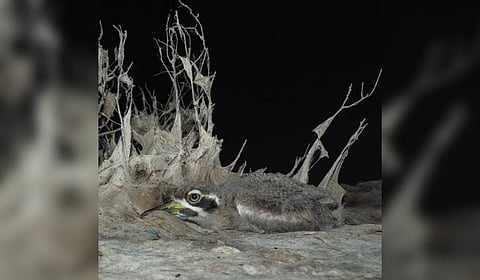

CHENNAI: Even as the Tamil Nadu government’s proposed Mamallan freshwater reservoir at Nemmeli continues to face legal scrutiny before the southern bench of National Green Tribunal (NGT), a new field survey has documented 47 bird species breeding in the Kovalam-Nemmeli Coastal Wetland Complex, adding fresh ecological evidence to the debate over the project’s impact on the coastal habitat.
The findings, documented by volunteer conservation collective Suzhal Arivom, suggest that Nemmeli is not only an important wintering ground for migratory birds but also a critical breeding landscape for resident species. Based on surveys covering about 35% of the accessible wetland, the report recorded 22 species nesting on the open saltpans and mudflats around Nemmeli and another 25 species breeding in the Kelambakkam wetland margins and mangrove patches. Species confirmed breeding include the red-wattled lapwing, kentish plover, black-winged stilt, grey francolin, oriental pratincole, red-necked falcon and Indian pied starling.
“Among the most significant findings is the great thick-knee, a Near Threatened species on the IUCN Red List. The bird has bred at Nemmeli for at least five consecutive years, making it the only known breeding stronghold in the Kelambakkam-Thiruporur-Thirukazhukundram landscape,” Deepak Venkatachalam, founder of Suzhal Arivom, told TNIE.
He also contends that this breeding ecology was not reflected in the project’s Rapid Environmental Impact Assessment (REIA). “The avifaunal survey for the REIA was carried out between July and November 2025, while the breeding season for most resident birds in the region occurs between February and June,” Deepak said.
However, senior officials of Tamil Nadu Coastal Zone Management Authority (TNSCZMA) and water resources department (WRD) have defended the project and rejected allegations that the project had been approved without adequate environmental scrutiny.
Asha Ajith, member secretary of TNSCZMA, in an affidavit submitted before the NGT on Thursday, said the authority has taken into account mitigation measures proposed by the WRD, which include creation of six artificial islands to serve as protection habitats for the local flora and fauna for roosting and nesting grounds away from human interference.
“Additionally, the design includes rejuvenation of the Buckingham Canal to maintain tidal exchange between the Muttukadu and Kokilamedu estuaries, and development of shallow peripheral wetlands to support feeding by wading birds,” Asha said.
However, conservationists say artificial habitats cannot fully substitute the extensive open saltpans and mudflats currently used by ground-nesting birds during breeding season.
