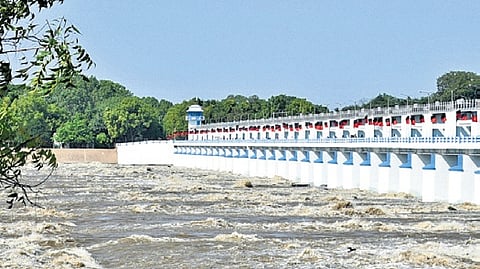

CHENNAI: After years of neglect in carrying out major renovation works, the water resources department (WRD) has proposed a comprehensive repair and maintenance plan for barrages across the Cauvery basin, seeking nearly Rs 300 crore from the state government to restore ageing infrastructure and improve flood management. The barrages which are key to regulating river flow, diverting water for irrigation and handling floodwaters, have not had a comprehensive renovation in 15 years, officials said.
The proposal, which is expected to be considered by the state government ahead of the upcoming Assembly session, covers nearly 10 barrages in the Cauvery basin, including Mohanur in Namakkal, Mayanur in Karur and Mukkombu in Tiruchy. According to officials, many of these have been in service for decades and require urgent repairs.
During the Cauvery floods in 2018 and 2019, they successfully managed a discharge of nearly 2.5 lakh cusecs. However, officials admitted that the condition of several barrages, particularly those at Mayanur and Mukkombu, has deteriorated due to lack of maintenance.
A senior WRD official told TNIE that around 50% of the shutters in the Mayanur, Mukkombu and a few other barrages were damaged during previous floods and are yet to be fully renovated.
“Our immediate priority is to replace and renovate the damaged shutters. Besides this, concrete strengthening and repairs to civil structures are required in several barrages. In 2022, the department carried out Cauvery river improvement works worth around Rs 200 crore, but renovation of barrage shutters was not included.
We have now submitted a detailed proposal seeking Rs 300 crore to address these long-pending issues,” the official said. The official pointed out that barrage shutters are required to undergo major renovation once every five years as per departmental norms.
With the delta region depending heavily on the Cauvery irrigation system, officials said timely approval and execution of the proposed works would not only improve flood-handling capacity but also strengthen the longevity of the state’s vital water infrastructure.
