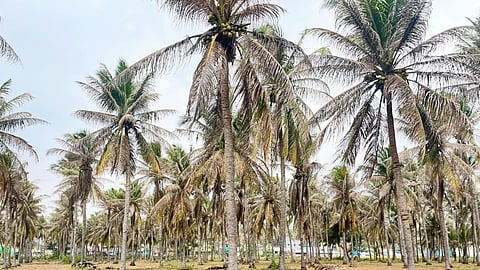

COIMBATORE: Coconut farmers in the northern parts of Sulur taluk are grappling with a severe outbreak of black-headed caterpillar, which are damaging their plantations.
Farmers from Mopperipalayam areas reported that the pest infestation has become extremely severe, with many trees showing heavily damaged fronds. They expressed concern that the infestation is rapidly spreading to neighbouring villages such as Kaduvettipalayam, Kittampalayam, and Paduvampalli, through the prevailing north and east winds.
The black-headed caterpillar (Opisina arenosella) attacks the lower portions of coconut leaves, scraping away the chlorophyll. Affected fronds turn dry, leading to reduced photosynthesis, fewer leaves and a sharp decline in coconut yield.
Farmers also noticed insect excreta and silken webs at the base of the fronds, and have urged the horticulture department to take immediate steps to control the spread before the damage becomes irreversible.
In response, officials from the horticulture department have recommended measures to be followed up by farmers. "Farmers should cut and burn severely infested fronds to destroy larvae and pupae. In biological control, release of parasitic wasps such as Bracon species can help. Due to wind patterns, parasitoids should be released preferably in the western parts of plantations during cooler daytime hours," said officials from the horticulture department.
"Under the light traps method, farmers should install one light trap per acre between 7 pm and 11pm to attract adult moths and reduce laying of eggs. They can also use chemicals in severe cases as a last resort. Spraying 0.2 ml Dichlorvos or 0.5 ml of Malathion/Quinalphos/Phosphamidon per litre of water targeting the webs on the underside of fronds also helps," said officials.
As a precautionary step, farmers in unaffected areas within a 3-km radius have been advised to proactively release parasitoids.
