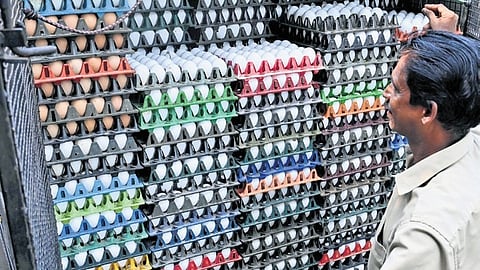

NAMAKKAL: The farmgate price of eggs in Namakkal has touched a record high this year, with poultry industry representatives attributing the increase to rising feed and transportation costs, lower production and strong domestic demand.
They said the upward trend is likely to continue if production does not recover in the coming weeks, adding that farmgate prices could soon cross Rs 7 per egg, pushing retail prices to above Rs 8.
The National Egg Coordination Committee (NECC), which declares the daily farmgate egg price based on supply and demand, fixed the price at Rs 6.70 per egg from Tuesday (14 July), the highest recorded so far for the Namakkal zone.
Industry representatives said the current surge is driven by multiple factors. PV Senthil, president of the Livestock and Agri Farmers Trade Association, said rising feed costs, summer-related production decline and higher transportation expenses had pushed up prices.
“Namakkal normally produces around six crore eggs a day, but production has now fallen to around five crore eggs, with several farms reporting a drop in output,” he said. Senthil added that viral infections had forced some farms to cull birds, and production would take nearly two months to recover as replacement birds require time before they begin laying eggs.

He also said that while exports had fallen sharply — from around 75 lakh to one crore eggs a day to nearly 10 lakh eggs — the reduction in production and strong local demand had pushed prices higher. He noted that Namakkal prices are also influenced by trends in other major poultry markets, and a continued rise across the country could keep local prices firm.
Poultry farmer Sundarrajan said rising feed costs have become a major factor behind the increase in egg prices. Soybean prices have risen from around Rs 35 to Rs 68 per kg, while maize has increased from Rs 20 to Rs 28 per kg. A bird consumes around 100 to 115 grams of feed daily, and a farm with one lakh birds requires more than 10 tonnes of feed every day.
A Rs 10 increase in feed cost per kg adds nearly Rs 1 lakh to the daily expenses of such farms,” he said. “It is a chain reaction. Higher diesel prices increase the cost of transporting feed and eggs, with rising logistics expenses eventually reflected in egg prices,” he added.
A senior Animal Husbandry Department official in Namakkal said the department had not noticed any widespread disease outbreak affecting poultry farms. “Production generally dips during the summer because of heat stress. Even though it is only July, temperatures have remained high and production has not fully recovered,” the official said.