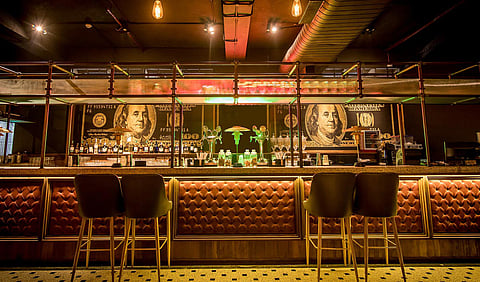

CHENNAI: As part of its ongoing reforms in the liquor retail sector, the Tamil Nadu government is likely to permit standalone restaurants in major cities across the state to operate as resto bars. The proposal is expected to be announced during the upcoming Budget session, according to official sources.
Currently, the state does not issue a separate licence for resto bars. Earlier, the previous DMK government had explored the idea of introducing such establishments. However, the proposal was dropped following opposition from various quarters.
A senior home department official said that several private establishments holding FL2 (recreation club) licences serve liquor along with food to the general public, despite being permitted to serve only to their registered members. “Under the licence conditions, FL2 clubs can provide liquor only to members. However, some clubs are functioning like regular bars by serving all customers with food, which is a violation of rules,” the official said.
Officials said this practice has also resulted in revenue loss to the government. To regulate the sector and improve compliance, the government is considering issuing dedicated licences for resto bars instead of allowing such operations under recreation club licences.
The official explained that the government currently issues FL1 licences for bars attached to Tasmac retail outlets, FL2 for recreation clubs and FL3 for classified star hotels. If the proposed policy is implemented, a new category, likely to be named FL3A, may be introduced for restaurants to operate as resto bars.
Sources said the government is also working on the licence fee structure for the proposed category. Recently, the annual privilege fee for FL2 licence holders in Chennai was increased from `15 lakh to `30 lakh. Similar charges are expected to be fixed for resto bar licences after the new policy is finalised.
The official said the government is also examining the possibility of gradually reducing the number of bars attached to Tasmac retail outlets while encouraging licensed resto bars. However, no final decision has been taken on the proposal.
Meanwhile, a Tasmac bar operator, requesting anonymity, said the government should carefully study the market before implementing the new system. He pointed out that the resto bar model has already been introduced in neighbouring states such as Andhra Pradesh and Karnataka.
He also urged the government not to reduce the number of Tasmac bars, saying they cater mainly to people from economically weaker sections. “Many daily wage earners and low-income customers depend on Tasmac bars. Their needs should also be considered while introducing any new policy,” he said.
