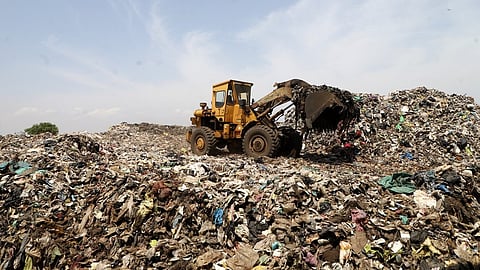

COIMBATORE: A coalition of citizens, environmental experts, resident welfare associations and civil society organisations from Tamil Nadu and across the country has urged the state government to withdraw the proposed 1,200-tonne-per-day Waste-to-Energy (WTE) plant at Vellalore in Coimbatore, advocating instead for a decentralised Zero Waste model of solid waste management.
In a joint representation submitted to the Tamil Nadu government, the signatories contended that the proposed incineration facility runs contrary to the National Green Tribunal's (NGT) directions on decentralised waste management, scientific biomining of legacy waste and restoration of the Vellalore dumpyard. They argued that the project would tie Coimbatore to an expensive and environmentally unsustainable waste management system that has faced challenges in several parts of India and abroad.
The proposed integrated facility is designed to process municipal solid waste generated in both Coimbatore and neighbouring Tiruppur by transporting it to Vellalore. The signatories said this raises environmental justice concerns, as residents of Vellalore and nearby areas have already borne the impact of decades of waste dumping and could face an even greater environmental and public health burden if the project proceeds.
The representation cited observations by government agencies, including CSIR-NEERI, which have noted that Indian municipal solid waste, owing to its high moisture content and low calorific value, is generally unsuitable for large-scale incineration. It also referred to the closure of waste incineration facilities in Chennai following environmental and regulatory issues and pointed to the growing global shift towards Zero Waste systems.
K S Mohan, secretary of the Kurichi-Vellalore Pollution Prevention Action Committee, said residents living around the Vellalore dumpyard have endured the effects of nearly 1,200 tonnes of waste being dumped daily for more than two decades. He alleged that groundwater contamination and deteriorating environmental conditions have severely affected public health and drinking water quality. He urged the government to implement the NGT's directions to scientifically remediate the dumpyard and restore the land for public use rather than establish another waste processing facility.
Echoing similar concerns, Geo Damin of Poovulagin Nanbargal questioned why Coimbatore should adopt a technology that, according to him, had already proven problematic in Chennai. Environmental lawyer Madhuvanthi Rajkumar said many countries have moved away from municipal waste incineration, citing the closure of dozens of such facilities in the United States over the past two decades.
The signatories have called on the Tamil Nadu government, the Tamil Nadu Infrastructure Development Board and the Coimbatore City Municipal Corporation to withdraw the proposal, release all feasibility and environmental assessment reports, commission an independent comparison between the proposed incinerator and Zero Waste alternatives, expand investment in segregation, composting, biomethanation and recycling infrastructure, and formulate a district-wide Zero Waste strategy that integrates informal waste workers into the municipal waste management system.
