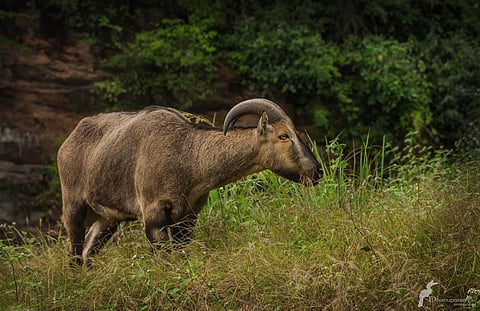

COIMBATORE: The Nilgiri tahr population, which has been rising steadily across the state, has particularly increased in Pollachi division. From 341 Nilgiri tahrs in 2024, the population of the mountain ungulate rose to 428 in 2025 and reached 438 in 2026. This growth has come despite threats such as forest fires and increase in human settlements near their habitats. In particular, the state animal’s population in Tenkasi and Tiruppur Forest Divisions is facing higher levels of threats due to forest fires, illegal forest produce collection and the spread of invasive species.
As part of quantification, Project Nilgiri Tahr team has identified 11 major threats that the ungulates are facing, with different intensity levels ranging from nil to very high, including cattle grazing and forest fires. After analysis, the team has identified that the Tenkasi and Tiruppur forest divisions represent the most critical threat hotspots in the region. There were 19 forest fires and nine incidents of illegal collection of forest produce reported in Tenkasi. Likewise, the Tiruppur division is dominated by the landscape's highest density of invasive species and substantial fire risks.
"Tenkasi and Tirupur divisions alone account for over half of the total fire and invasives-related disturbances, marking them as the highest priority for immediate ecological restoration and fire watch reinforcement. Likewise, Srivilliputhur is highly influenced by cultural factors, with a high number of places of worship, while Theni and Coimbatore are primarily impacted by invasive species and human settlements," said a senior official of Project Nilgiri Tahr.
Compared to last year, the population of the animal increased to 26 in Periyattumalai in Madukkarai Forest Range of Coimbatore Forest Division. Out of the seven forest ranges in Coimbatore Forest Division, Madukkarai (two blocks) and Boluvampatti (three blocks) forest ranges have Nilgiri tahrs.
"During the 2025 census, we recorded only nine animals, and none were recorded during the 2024 census. During our observation in the 2026 census, the number increased to 26. The rise in population is due to the undisturbed habitat, as well as the possibility that animals may have moved from nearby Kerala, since the Madukkarai forest is closely located to Silent Valley," said an official involved in the census.
The synchronised Nilgiri tahr population estimations conducted during 2024, 2025 and 2026 show a steady increase in the overall estimated population in Tamil Nadu. The total population increased from 1,031 in 2024 to 1,303 in 2025 and 1,364 in 2026, indicating an overall positive trend in the conservation status of the species across the southern Western Ghats.
The animal occupies a wide range of elevations, from about 270 m to nearly 2,695 m above mean sea level, in the unique montane grassland-shola ecosystem along the margins of tropical evergreen, dry deciduous and thorn forests. It is an agile climber, capable of moving effortlessly across cliffs and rocky slopes. This ability not only helps it avoid predators and disturbances but also allows it to use habitats inaccessible to many other large herbivores. Hence, the animal plays an important role in maintaining the balance and health of fragile mountain ecosystems.
