
CHENNAI: The state received 330.44 thousand million cubic feet (tmcft) of Cauvery water from Karnataka during the 2025-26 water year (June 2025 to May 2026), far higher than the 177.25 tmcft allocated by the Supreme Court.
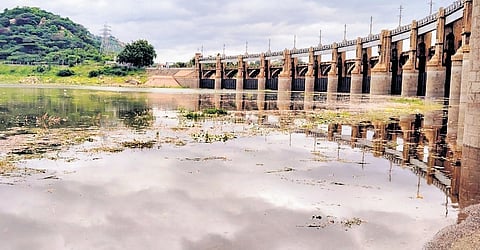
Despite the state receiving a surplus of 153.19 tmcft during the period, making it the highest Cauvery inflow recorded in the last three years, the delta region will miss the customary water release from the 120-foot-tall Mettur dam on June 12 due to the critically low water level. On Thursday, the dam had only 41.579 TMC (44.48%) storage against its full capacity of 93.47 TMC.
For comparison, the state received 305.63 tmcft during the 2024-25 water year, while the inflow dropped sharply to 81.36 tmcft in 2023-24, a drought year marked by poor rain and lower releases from Karnataka. Farmers and water experts expressed concern that the state lacks adequate infrastructure to store the excess water effectively.
Professor S Janakarajan, president of the South Asia Consortium for Interdisciplinary Water Resources Studies (SACI), said, “Tamil Nadu has been receiving surplus Cauvery water since 2018, but nearly 70% of it eventually flows into the sea due to inadequate storage facilities.”
He suggested that the government construct check dams at intervals of about 2 km across the Cauvery basin, so that an additional 10 tmcft of water could be stored during the monsoon. He pointed out several irrigation tanks in the delta districts remain dry and could be filled using the surplus water.
Janakarajan also urged the TVK government to constitute an expert committee to prepare a report on constructing new check dams and barrages, and assessing the financial requirements for these projects.
S Sivakumar, chief engineer of the WRD, Tiruchy region, said a detailed study on desilting the Mettur dam is being carried out with the assistance of Water and Power Consultancy Services. He added that the WRD has also proposed the construction of three new barrages in the Cauvery basin and is awaiting approval of funds from the government.
(With inputs from Sneha Sivashanmugam @ Salem)
