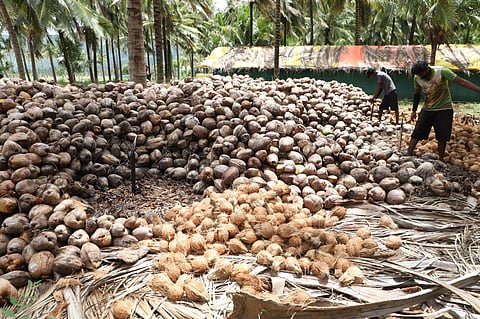

COIMBATORE: Coconut farmers in Coimbatore and Tiruppur districts are facing difficulties with a sharp increase in production costs as wages for de-husking coconuts have surged to Rs 1.50 per nut over the recent weeks.
The hike, attributed to a severe shortage of manpower, has added significant financial pressure on growers already navigating volatile market conditions.
According to farmers, the wage for de-husking has risen by 50 paisa in just the last two months. Until April, the rate stood at `1 per coconut. However, from May onwards, the cost jumped to `1.50 due to persistent labour scarcity.
"There is a high demand for workers involved in de-husking for the last two months. Even coconut farmers are not able to get labourers for the work," said K Balakrishnan, a farmer from Sulur.
The shortage is largely linked to the absence of migrant workers who have supported farm operations in the recent past from the region. Many labourers, who had gone to their native places during the elections, have not come back. Farmers believe that some may have settled in their native places or shifted to alternative employment opportunities within the state.
There are also unconfirmed reports that a section of the workforce staying on farms could include Bangladeshi migrants. Farmers typically manage coconut husks — a key raw material for the coir pith and coir industry — in two ways. Some purchase coconuts with the husk intact, while others sell the nuts and husks separately.
Those handling de-husking themselves must periodically arrange workers, making them particularly vulnerable to wage fluctuations. In contrast, large traders who buy coconuts with husks from multiple farms have relatively easier access to labour due to the scale of their operations.
R Periyasamy, vice president of Tamil Nadu Vivasayigal Sangam, said, "Sudden hikes in de-husking costs will eventually push up coconut prices in the market. Traders who procure with husk have better access to workers, but small and marginal farmers who engage labour occasionally bear the impact."
The labour crisis extends beyond de-husking. Wages for harvesting coconuts by climbing trees have also increased from `2.25 to `3 per coconut over the past two months. The number of skilled tree climbers is dwindling as older workers retire or pass away, and younger people show little interest in the physically demanding job. Most climbers hail from southern districts of Tamil Nadu.
Though agricultural engineering tools exist for harvesting trees below 50 feet, they cannot be used for taller ones. Similarly, coconut de-husking machines are available but remain underutilised due to high costs and limited viability for small farmers.
As the coir industry depends heavily on a steady supply of husks, the ripple effects of this crisis could extend beyond farms to processing units and rural livelihoods.
