
KALLAKURICHI: When the deadly hooch tragedy struck Kallakurichi on June 18 and 19, 2024, unfair blame and stigma were cast upon the Malayali tribal community of Vellimalai town, situated nearly 40 km away from the site of the disaster.
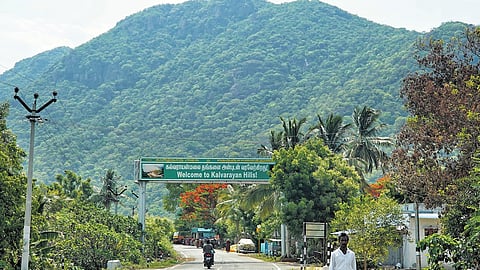
Kalvarayan Hills, inhabited by around 60,000 people, is home to the culturally-rich Malayali tribals and serves as a hub for 117 villages. It falls under the Sankarapuram Assembly constituency.
Official sources said about 80% people reside in houses built by government over the last two decades. Though the area is vast and the villages are scattered, they are connected through frequent government bus services.
The hill has four government primary health centres and 135 ASHA (Accredited Social Health Activist) workers provide health care services. It has one Ekalavya Model Residential School and 69 primary, middle and higher secondary-level government schools.
Immediately after the hooch deaths, rumours falsely traced the supply to the Kalvarayan Hills. This brought the local tribal residents under intense police scrutiny and left them vulnerable. The villagers and even some local law enforcement officials, however, strongly deny that the tribes had any role in the tragedy. They point out that the locally brewed arrack made by the tribes is completely distinct from the toxic, methanol-laced hooch responsible for the deaths.
Though both arrack and hooch are illegal, police officials said the two differ significantly in ingredients, brewing process, quality and impact. A police officer working in the hills said locally brewed arrack is usually consumed within the hill and was rarely sold downhill, whereas chemically manufactured hooch on the plains was produced by distilling spirit and adding methanol.
According to M Ramasamy (60) of Vellimalai, “The two drinks are entirely different. We brew arrack once in a while for our family functions. Maybe a few among us sold it, but they were all under police radar. As much as I remember, nobody died of arrack poisoning, as it is made from boiling natural ingredients like nuts and spices. We refrain from using chemicals like methanol or spirit.”
But our Malayali tribesmen were blamed for the moonshine, he claimed. “Had we been doing illegal liquor business as blamed, most of us would be millionaires by now,” he added.
“Even now, we are looked down badly when we go to neighbouring towns for family events. Relatives and friends treat us as if we are into hooch trade. They openly insult us by saying we belong to the ‘kalla saarayam Kalvarayan malai’ (illicit liquor Kalvarayan hills),” laments K Vasanthi (36) of Melsathanur.
The hill population says self-employment, not arrack, has sustained their families for generations. From milk to farm produce, they had depended on selling forest goods for income for one half of the year, while migration work sustained them during the non-farming season.
“My grandmother sells milk and fruits. I grow mushrooms and sell them to stores in the region and downhill. The hooch tragedy and rumours have tarnished our hard-earned dignity. Two years on, we are slowly moving away from the blame towards self-empowerment,” said J Jayanthi (26).
Residents also alleged that police action became far more stringent after the tragedy. Many of us stopped sugarcane cultivation and jaggery production for domestic use fearing police action, they said.
For instance, Vasanthi’s son-in-law was arrested a year ago for allegedly storing molasses and remained in jail for 15 days, last year. “He didn’t store any contraband substance; but had just poured down the residue after making jaggery. But he was arrested on grounds of preparing arrack. They let him go after making us pay a fine of Rs 20,000,” she alleged.
Kariyalur police said strict enforcement is necessary to ensure zero illicit liquor on the hills. Police sources said there is no arrack production on the hills especially after the hooch incident. People now prefer to stay away from illicit brewing and instead rely on cultivation and migrant work for their livelihoods. They don’t want to risk their lives by attempting to brew arrack even for their family or personal events. Also, the prevalence of ganja is absent on the hills, they added.
The tribals have also shifted their dependence on liquor to four Tasmac outlets in Vellimalai, Serapet, Kottaputhur and Perumanatham, police said.
According to the district administration, 9,547 forest rights pattas have been issued and digitised. These land documents have encouraged locals to take up farming, though families say agriculture alone cannot yet sustain them.
“We now have land where we can cultivate crops legally. But crops take several months to grow and generate income. Until then, we still have to migrate for work,” said P Palanisamy (45) of Melvazhapadi near Vellimalai. Like many others, he migrates seasonally to pepper plantations in Mysore until farming becomes economically viable.
Loans for milch animals were provided to 120 erstwhile habitual offenders, and 114 habitual offenders received vocational and skill development training to promote sustainable livelihoods and social reintegration, a release by the district administration said.
Speaking to TNIE, district collector JE Padmaja said rehabilitation efforts are being carried out more rapidly. “We have plans to expand sports activities for children and improve their healthcare and education. We have addressed most of the grievances of people in the hills now,” she said.
For the tribal residents of Kalvarayan hills, the aftermath of the 2024 hooch tragedy has never been about the liquor itself. It has been about living with dignity, fighting out misinformation, and rebuilding livelihoods.
