
CHENNAI: The Tamil Nadu government is revisiting plans to integrate industrial inspection records across multiple regulatory agencies following the fatal ammonia leak in Tiruvallur, though officials say a single, unified inspection mechanism is neither legally feasible nor desirable because each department exercises distinct statutory powers.
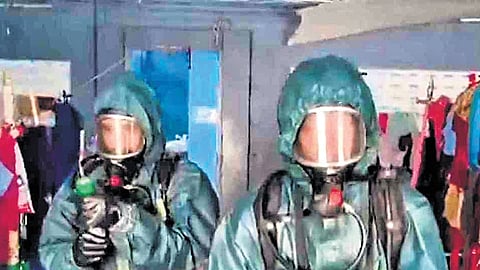
The move comes amid growing scrutiny of the state’s industrial safety regime following the Tiruvallur accident, which killed 13 migrant workers and left more than 60 hospitalised, exposing concerns over regulatory oversight at hazardous industrial facilities.
A senior government official told TNIE that discussions are under way on creating a common digital platform that would integrate inspection data generated by different regulators through application programming interface (API) links, allowing departments to share information while retaining their individual jurisdictions.
The proposal, first discussed nearly four years ago as part of the state’s ease-of-doing-business reforms, has gained renewed attention after the ammonia leak at a seafood processing unit claimed 14 lives.
Officials said each regulator would continue to conduct inspections under its respective law. The Directorate of Industrial Safety and Health (DISH) would remain responsible for worker safety under the Factories Act, while the Tamil Nadu Pollution Control Board, the Directorate of Boilers, Guidance other agencies would continue to exercise their mandate
At the centre of the discussions is a proposal to place inspection schedules, reports and compliance records on a common digital platform, allowing both industries and the public to track regulatory inspections carried out by different departments. This was highlighted by TNIE in a report titled “Lack of information on factory checks casts doubts on oversight in TN” on June 25.
In October 2020, the industries department issued a government order establishing the Tamil Nadu Central Inspection System, envisaging a single portal to coordinate inspections by DISH, TNPCB, labour department and directorate of boilers. The order also called for publication of inspection schedules, inspector allocation and inspection reports to improve transparency and accountability. However, the system was never fully operationalised.
Officials said preliminary discussions on such a system began two to three years ago but failed to gain traction. The renewed push follows questions over whether existing monitoring mechanisms are adequate for industries handling hazardous chemicals and refrigerants such as ammonia.
Labour rights groups and environmental activists have meanwhile called for a comprehensive overhaul of industrial safety oversight, arguing that transparency in inspections is critical to preventing future accidents.
The tragedy has nevertheless reignited debate over the fragmented nature of industrial regulation in Tamil Nadu, where multiple departments conduct separate inspections and maintain independent compliance records.
