
COIMBATORE: In an attempt to improve the livelihood of tribal women, residents of Thuvaipathy village in Periyanaickenpalayam block have started selling value-added tamarind. Under the Van Dhan Vikas Kendra (VDVK), the first batch of processed tamarind was handed over to Collector Pavankumar G Giriyappanavar.
The VDVK functions under the Pradhan Mantri Van Dhan Yojana (PMVDY). The initiative is implemented through the Directorate of Tribal Welfare, with the Tribal Cooperative Marketing Development Federation of India serving as the national nodal agency.
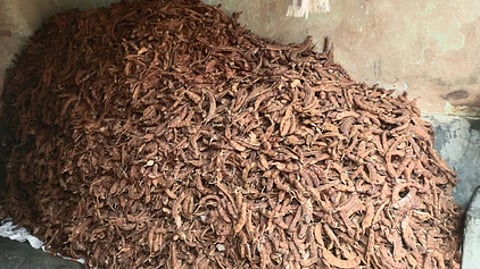
The Coimbatore VDVK has brought together 584 registered tribal members, who collect and market Minor Forest Produce (MFP), such as honey, amla, tamarind, arappu and shikakai from forests. Among these products, tamarind has emerged as a major livelihood opportunity owing to its abundance, with an estimated 2,000 tonnes available every harvesting season.
With a total grant of `41.2 lakh (`29.2 lakh from Ministry of Tribal Affairs and `12 lakh under the Government of Tamil Nadu- Tholkudi -Ainthinai Thittam), there are two processing units as part of the scheme. One unit is already operational at Thuvaipathy village, Meanwhile, the district administration has allocated two acres of land at Kandiyur village near Velliangadu for the second unit, which will begin operations soon.
S Bharathidasan, secretary of Arulgam, which supports the initiative, said they have been assisting tribal communities by providing training, procuring tamarind from fellow tribals, and handing it over to the women for processing. He added that they are in the process of launching a website to market and sell the value-added tamarind globally.
"Currently, 12 tribal women are engaged in the processing, and the initiative will soon provide employment opportunities to more women. It is an important local livelihood opportunity," said Bharathidasan. "We promote sustainable harvesting techniques as an alternative to traditional methods that completely strip tamarind trees. By leaving a portion of the fruit on the trees and harvesting without damaging the branches, we ensure that wildlife continue to have uninterrupted access to this vital food resource."
