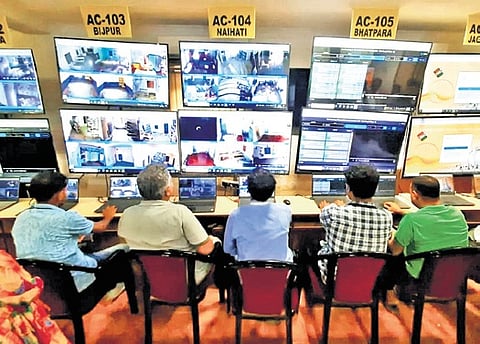

CHENNAI: The Madras High Court has sought the response of the Election Commission of India (ECI) to a petition filed by a private firm – providing surveillance system for elections – challenging the recent tender floated by the Chief Electoral Officer (CEO) for Tamil Nadu for installing webcasting facilities at the 75,000 polling stations in the state for the elections.
The first division bench of Chief Justice Sushrut Arvind Dharmadhikari and Justice G Arul Murugan directed the commission to file the reply on Tuesday, and accordingly, adjourned the hearing.
The petition – filed by G Haritha, director of I-Net Secure Labs Private Limited – said the company is engaged in providing large-scale surveillance services for electoral monitoring process including live web streaming of polling proceedings during elections and has experience of offering such service in eight states including Tamil Nadu and Bihar, where the polls were held recently.
In the last seven years, it has supplied 1.80 lakh cameras to polling stations for webcasting and 8,000 CCTV cameras to counting centres. The office of the CEO had issued an e-tender notification dated March 3, 2026, inviting bids for live webcasting in polling stations on the polling day and recording on the counting day for current elections requiring about 1.50 lakh cameras.
However, clause 4 (5) of the notification stated that the bidder should have an average annual turnover of Rs 100 crore and above in the last three audited financial years, whereas the project value was only around Rs 120 crore, the petition noted.
It stated that this restrictive eligibility criterion is against the established public procurement principles and the Central Vigilance Commission guidelines, which state the turnover requirements in public tenders should generally not exceed 30%-40% of the estimated project value unless it is extremely necessary due to the unique nature of the procurement.
It alleged that prescribing such a huge turnover, accounting about 83% of the estimated project value, is highly arbitrary and disproportionate and would deprive the companies with lesser turnover of the opportunity for participating in the tender.
The petition sought the court to quash the condition and order issuance of a fresh tender with non-restrictive eligibility criteria and permit consortium of companies to participate in the tender.
