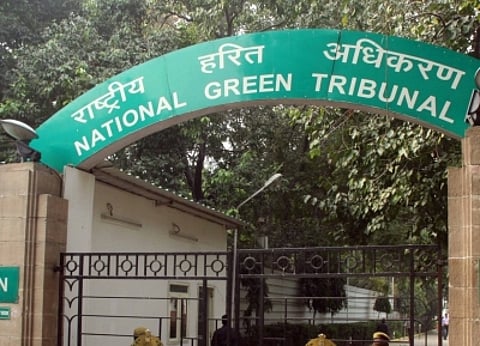

CHENNAI: In a significant push to make air pollution control more accountable, the southern bench of the National Green Tribunal (NGT) has directed that public funding under India’s clean air programme be tied to measurable improvements in air quality, even as it flagged persistent pollution hotspots in Tamil Nadu and across southern States.
In its judgement dated April 28, the bench, comprising Justice Pushpa Sathyanarayana and expert member Prashant Gargava, ordered Tamil Nadu, Kerala, Karnataka, Andhra Pradesh, Telangana, and Puducherry to prepare sector-wise implementation roadmaps within six months, clearly linking budgets with targeted reductions in PM10 and PM2.5 levels.
The tribunal also directed the Ministry of Environment, Forest and Climate Change (MoEF&CC) and the Central Pollution Control Board (CPCB) to revamp fund allocation guidelines under the National Clean Air Programme (NCAP) so that future releases are contingent on sector-specific emission reductions and demonstrable air quality gains.
While Tamil Nadu broadly reports “Good” to “Satisfactory” air quality, the NGT cautioned that localised PM10 exceedances persist, particularly in industrial and urban clusters. In Chennai, pollution sources remain diverse - road dust (27.9%), transport (23.2%), industry (20.2%) and biomass burning (12.7%)- reflecting a complex emissions profile, according to the Greenpeace “Spare the Air 2” report that informed the tribunal’s suo motu proceedings.
The report also highlights that PM 2.5 levels in Chennai are 5-6 times higher than WHO guidelines at most monitoring locations, with PM10 levels 4-5 times higher, despite remaining closer to national standards. Air quality in the Chennai region, though relatively better than northern cities, faces episodic spikes due to construction activity, traffic congestion and industrial emissions, especially in areas like Gummidipoondi.
A key concern flagged by the tribunal is that State Action Plans (SAPs) remain weak in execution. In Tamil Nadu, while measures such as industrial emission controls and online monitoring systems are in place, critical policies like vehicle scrappage remain unnotified, and enforcement in urban hotspots requires strengthening.
Across southern States, the NGT identified systemic gaps including incomplete emission inventories and source apportionment studies, weak enforcement and inter-agency coordination, skewed spending patterns, particularly excessive focus on road dust, and insufficient monitoring infrastructure, all of which are limiting the effectiveness of otherwise comprehensive clean air plans.
The judgment sharply criticised inefficient utilisation of public funds, citing Karnataka as a key example. According to the official records, a total of Rs 597.54 crore was released to the State under NCAP and the Fifteenth Finance Commission between 2019–20 and 2023–24, of which only about Rs 221.98 crore, or 37%, had been utilised as of October 2024. This later improved, with utilisation rising to Rs 471.82 crore out of Rs 618.82 crore, or 76%, by September 2025. However, the tribunal noted that more than 86% of the utilised funds had been spent on dust control alone, raising concerns over prioritisation and outcome-based spending.
In Tamil Nadu, the tribunal recorded that Rs 4,400 crore was allocated by the Fifteenth Finance Commission for air quality improvement in million-plus cities, with Rs 233 crore earmarked for the State, including Rs 181 crore for Chennai, Rs 31 crore for Madurai and Rs 21 crore for Trichy. The tribunal stressed that such allocations must translate into measurable pollution reduction outcomes rather than remain confined to expenditure reporting.
This concern is echoed in the Greenpeace analysis, which found that 64% of NCAP spending nationally has gone towards dust mitigation, with relatively little investment in tackling major pollution sources such as transport and industry.
