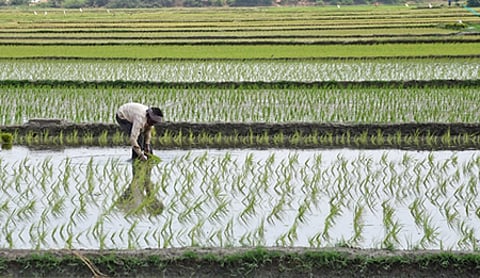

NAGAPATTINAM: With the northeast monsoon failing to bring the anticipated rainfall and irrigation water remaining inadequate, samba and thaladi crops across the Cauvery delta are increasingly coming under stress, raising concern among farmers over crop survival and a possible decline in yields.
The recent showers, which fell short of forecasts of moderate to heavy rainfall across the region, have provided only temporary relief. Farmers said another spell of rain within the next five days was crucial to sustaining the standing crops, warning that a prolonged dry spell could lead to widespread crop damage and adversely affect yields this season.
More than 26,000 hectares of the 1.10 lakh hectares under samba and thaladi cultivation in Thanjavur district are under severe stress, with crops on around 3,200 hectares already beginning to wither, a senior Agriculture Department official said.
Farmers in neighbouring Tiruvarur and Nagapattinam districts, where samba and thaladi crops have been raised on 1.42 lakh hectares and around 63,000 hectares respectively, fear a similar situation if rainfall remains inadequate.
"Although the standing crops appear green, the stress could affect grain formation, with plants potentially failing to produce healthy paddy panicles," said SR Tamilselvan of the Tamil Nadu Farmers Protection Association.
Pointing out that most crops were around 60 days old, Tamilselvan urged the state government to press the Centre and negotiate with Karnataka to secure Tamil Nadu's share of Cauvery water. He cautioned that even if water were released now, it would take at least 10 days to reach the tail-end areas.
"The government must act on a war footing to save the standing samba crops," he said.
Tamilselvan said farmers feared that continued water shortages could bring down yields in the tail-end districts to around 30 bags of paddy per acre, each weighing 50 kg, against the usual 40 bags in a good season with adequate irrigation.
P Kamal Ram of the Tamil Nadu Tail-End Farmers Association said the recent showers had moistened the parched soil, giving the crops a temporary lease of life.
"However, the crops need periodic rainfall, at least once every 10 days, to sustain cultivation," he said.
PS Masilamani of the Tamil Nadu Farmers Association in Tiruvarur said the growing uncertainty over water availability was making agriculture increasingly risky.
"Depleting groundwater and increasingly erratic weather, compounded by El Nino and long-term climate change, are deepening uncertainty over future water availability. Farmers may have to shift to alternative crops and adapt their cultivation practices, and the government must prepare them for these changes," he said.
With a lack of irrigation water from the Mettur dam following a deficient Southwest monsoon, the scanty Northeast monsoon rainfall across the delta has further worsened irrigation shortages.
