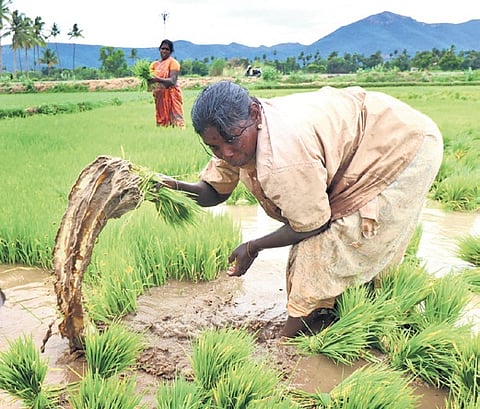

CHENNAI: THE area under paddy cultivation in Tamil Nadu during the kharif season (April-September) dropped by 28%, falling from 17.5 lakh hectares in 2025-26 to 12.52 lakh hectares this year — a decline of 4.98 lakh hectares. The sharp reduction is chiefly due to the delayed opening of Mettur Dam and lower Cauvery inflows.
The agriculture department, however, is banking on increased cultivation during the rabi season (October-March) to achieve TN’s annual foodgrain production target of 125 lakh metric tonnes (MT), which, according to officials, remains unchanged.
Former agriculture production commissioner Dr N Subbaiyan, who was replaced last Friday by N Venkatesh, said crop contingency plans had been sent to all districts and were being implemented. “Instead of transplantation, the farmers have been advised to adopt direct sowing, which not only reduces water requirements but also helps prevent potential crop damage during the northeast monsoon rains,” said Subbaiyan.
During 2025-26, TN achieved 122.43 lakh MT of foodgrain production, against its target of 130.23 lakh MT. He said, “For 2026-27, our target is to produce 125 lakh MT of foodgrains, including 79 lakh MT of paddy. The IMD has forecast normal rainfall during the rabi season. Hence, there is no change in the rabi-season target of 30.26 lakh hectares.”

‘Fears of foodgrain shortage baseless’
Further, Subbaiyan ruled out the possibility of foodgrain shortage in the state. “Samba cultivation has gathered momentum across the state, and the next 45 days will be crucial. Fears of a foodgrain shortage are baseless,” he added.
The area under kuruvai cultivation fell from 5.05 lakh hectares in 2025-26 to 3.91 lakh hectares this year — a decline of 1.14 lakh hectares. In the delta districts, kuruvai cultivation declined from 2.55 lakh hectares to 1.85 lakh hectares, a shortfall of 0.7 lakh hectares.
Meanwhile, sources in the cooperation department said fertilisers and seeds worth Rs 300 crore had got accumulated across the 4,400 primary agricultural cooperative credit societies (PACCS) in the state due to the decline in cultivation.
To promote cultivation and clear the accumulated stocks, the Tamil Nadu Co-operative Marketing Federation (TANFED), which acts as a wholesaler of fertilisers, recently decided to supply fertilisers to non-members of cooperative societies as well. So far, subsidised fertilisers were supplied only to farmers who avail themselves of crop loans and are members of the cooperative societies.
The cooperation department has also halted the recovery of crop loans as disbursements by cooperative banks have declined substantially amid the drop in cultivation.