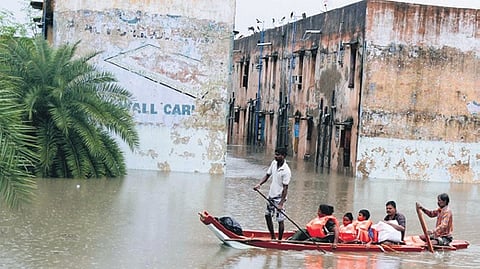

CHENNAI: With the northeast monsoon (NEM) expected to set in around October 15, a new assessment by the Coalition for Disaster Resilient Infrastructure (CDRI), a body which has over 50 nations as members, has flagged the financial risks Tamil Nadu faces from floods and cyclones. A single extreme weather event could cause losses of around $620 million (approximately `6,000 crore), with infrastructure recovery costs potentially exceeding funds readily available to the state, as per the report released on Monday.
Titled Towards Resilient Public Finance: Sub-National Assessment of Fiscal Risks in Critical Infrastructure Sectors in Tamil Nadu, the report estimates that a one-in-50-year (extreme weather events) flood could cause losses comparable to the damage caused by the devastating 2015 Chennai floods. The findings come days before the onset of the monsoon, with El Nino posing a threat of extreme weather events.
Conditions are becoming favourable for NEM rain over the southern peninsula within two to three days, the Regional Meteorological Centre (RMC) said on Monday and issued yellow alert for heavy rainfall in several districts from October 15.
In the study, floods are estimated to cause average annual losses of $84.3 million to energy infrastructure and $24.5 million to roads and bridges. The historical record illustrates the scale of exposure. The 2015 floods affected nearly 40 lakh people across six districts, displaced about 18 lakh people and damaged more than 1.16 lakh houses. The report estimates total losses at around Rs 14,602 crore.

Power infrastructure has repeatedly borne the brunt of extreme weather during Cyclone Thane (2011), 2015 floods, and Cyclone Gaja (2018).
Fiscal consequences
Modelling estimates that a disaster comparable to the 2004 tsunami could increase the state’s total expenditure by Rs 1,665.73 crore, including Rs 205.55 crore in additional social services spending and Rs 94.48 crore in relief payments. Internal debt issuance could rise by Rs 291.62 crore.
A disaster comparable to the 2015 floods could increase total expenditure by around Rs 167.41 crore. While the fiscal impact is greatest in the year immediately after a disaster, disruptions to livelihoods, businesses and local economies may last longer.
Amit Prothi, director general, CDRI, told TNIE that Tamil Nadu should adopt risk-informed budgeting, strengthen design standards and routine maintenance for power grids, roads and bridges, and create a State-wide digital database documenting disaster losses and infrastructure damage.
Prothi added that the state must also plan for reconstruction and resilience-building, making disaster preparedness an integral part of public financial planning rather than an expenditure addressed only after calamity strikes.