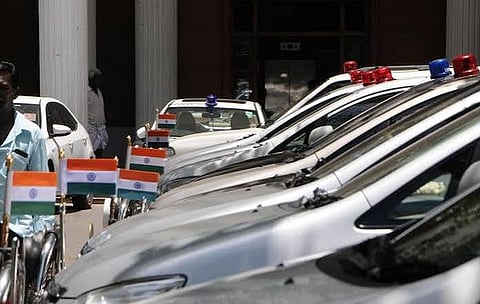

CHENNAI: The Tamil Nadu government has fixed the ceiling for the purchase of cars for ministers and MLAs and certain Assembly functionaries by amending the Tamil Nadu Legislative Assembly Travelling Allowance Rules, 1955.
According to the amendments, notified on October 1, the ceiling for the purchase of cars for the speaker, deputy speaker, leader of the opposition, and chief government whip shall be `26 lakh, while it shall be `15 lakh for all other MLAs.
The limits include the ex-showroom price of the vehicle, taxes, registration fees and motor vehicle insurance premiums. The rules stipulate that all vehicles must comply with BS-VI emission norms and be procured through the Government’s GeM portal.
The government will meet the expenditure on maintenance, repairs, fuel and drivers for ministers’ vehicles, while the Assembly Secretariat will bear these expenses for the four senior functionaries of the Assembly. Other MLAs will have to meet such expenses from the vehicle allowance provided to them.
The rules also specify that vehicles must be surrendered to the respective authorities when they vacate office owing to death, completion of tenure, removal, resignation or disqualification.
The issue of providing cars to MLAs came up in the Assembly after VCK MLA LE Jothimani highlighted the difficulties legislators faced in travelling across their constituencies.
On August 19, Chief Minister C Joseph Vijay announced that the government would provide official vehicles to all 234 MLAs to facilitate constituency visits, grievance redressal and monitoring of government schemes. He also announced a monthly allowance of `75,000 for fuel, maintenance and driver expenses, and `25,000 for an assistant.
The proposal had triggered a political debate over public expenditure, particularly because reports based on asset declarations indicated that a large chunk of the MLAs or their immediate family members already had access to cars.
On August 21, the DMK announced that its 59 MLAs would decline the government-provided vehicles, citing the State’s financial position, while some other political leaders questioned the need for the scheme.
