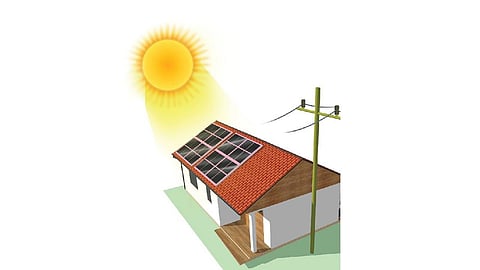

CHENNAI: With the centre planning to introduce PM Surya Ghar 2.0 in the next financial year, the Tamil Nadu Green Energy Corporation Limited (TNGECL) is exploring a proposal to extend subsidies to households that install rooftop solar systems integrated with Battery Energy Storage Systems.
The move comes as the existing PM Surya Ghar: Muft Bijli Yojana is scheduled to conclude at the end of the current financial year. The central government approved the scheme, with an outlay of Rs 75,021 crore on February 29, 2024, to promote rooftop solar installations and enable households to generate their own electricity. Meanwhile, the centre has sought suggestions from states for the proposed PM Surya Ghar 2.0, which is expected to be implemented from April 2027.
A senior TNGECL official told TNIE that households installing 3 kW rooftop solar systems could receive a subsidy of around Rs 1 lakh from the central and state governments under the existing scheme. However, battery storage systems are excluded from the domestic consumer subsidy.
“Considering this, we are exploring options to extend subsidies to battery storage systems as well,” the official said. The proposal is aimed at encouraging households to store surplus solar power for use during evening and night-time peak hours when electricity demand is high, and during those high-demand periods, the distribution utility may have to procure power from the open market at higher rates.
Another official said, “The Tamil Nadu Power Distribution Corporation Limited is struggling to meet peak-hour demand at times, forcing it to purchase expensive power from the market. If domestic consumers generate electricity for their own use and have battery storage facilities, the burden on the discom to meet household demand can be reduced.”
The official said that households with 3 kW rooftop solar installations could store at least 30% to 40% of the electricity generated for consumption at night. The centre should consider the financial and operational challenges faced by distribution utilities while framing the revised scheme, he added.
According to data from the Ministry of New and Renewable Energy accessed by TNIE, 63.32 lakh households across the country have been covered under the PM Surya Ghar scheme of which only 1.25 lakh (less than 2%) households are from Tamil Nadu. Of the cumulative installed capacity of 18,648.81 MW so far, the state’s installed capacity is only 397.51 MW (2.13%).
Officials cite lack of push for the scheme from the previous government, lack of awareness and growing apartment culture in the metro and er II cities as reasons for poor rooftop solar installation in Tamil Nadu.
